REFERENCE PROJECTS – PATHS
1- Sunac Yunyang, Qidi Design Group
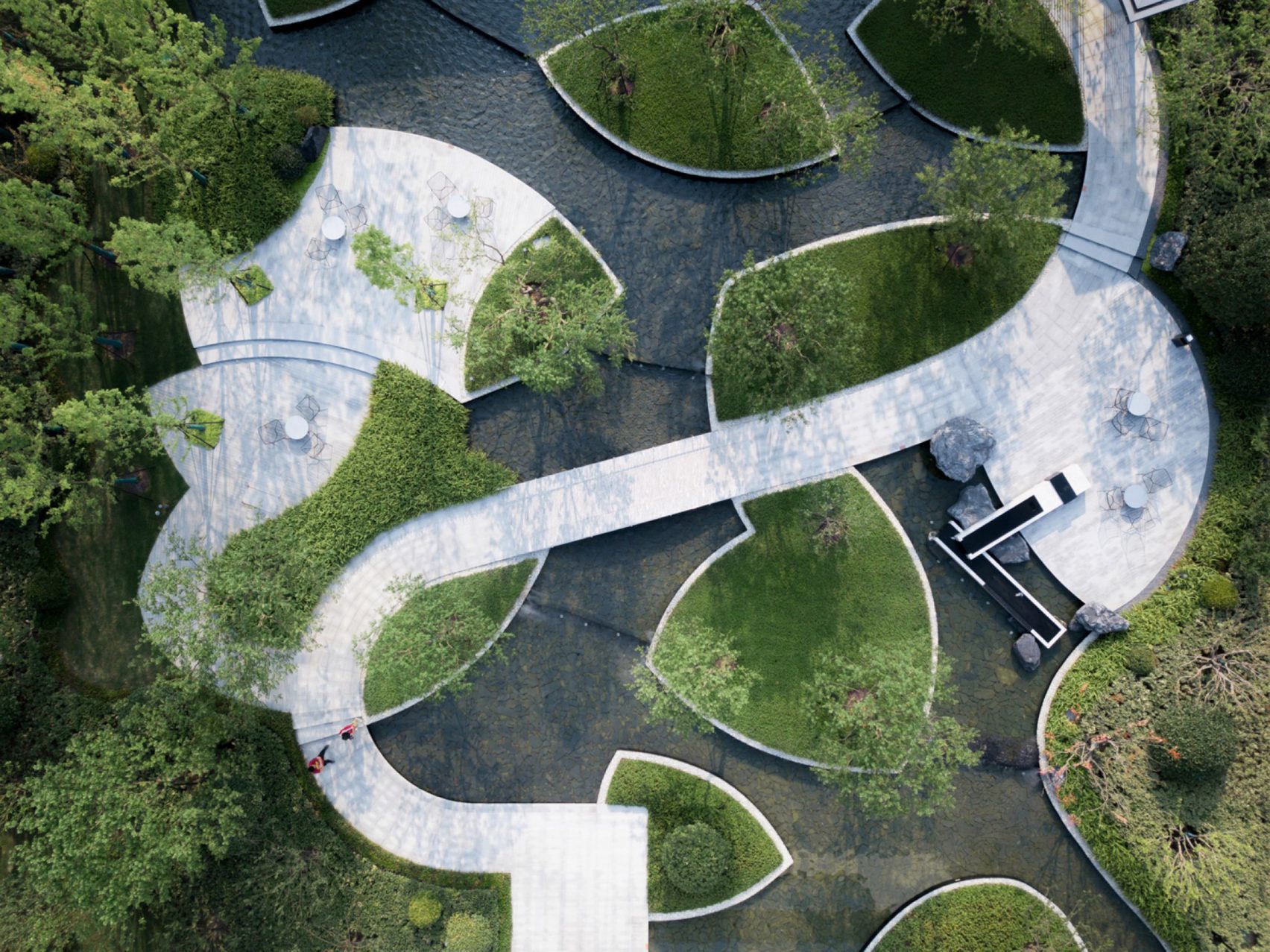
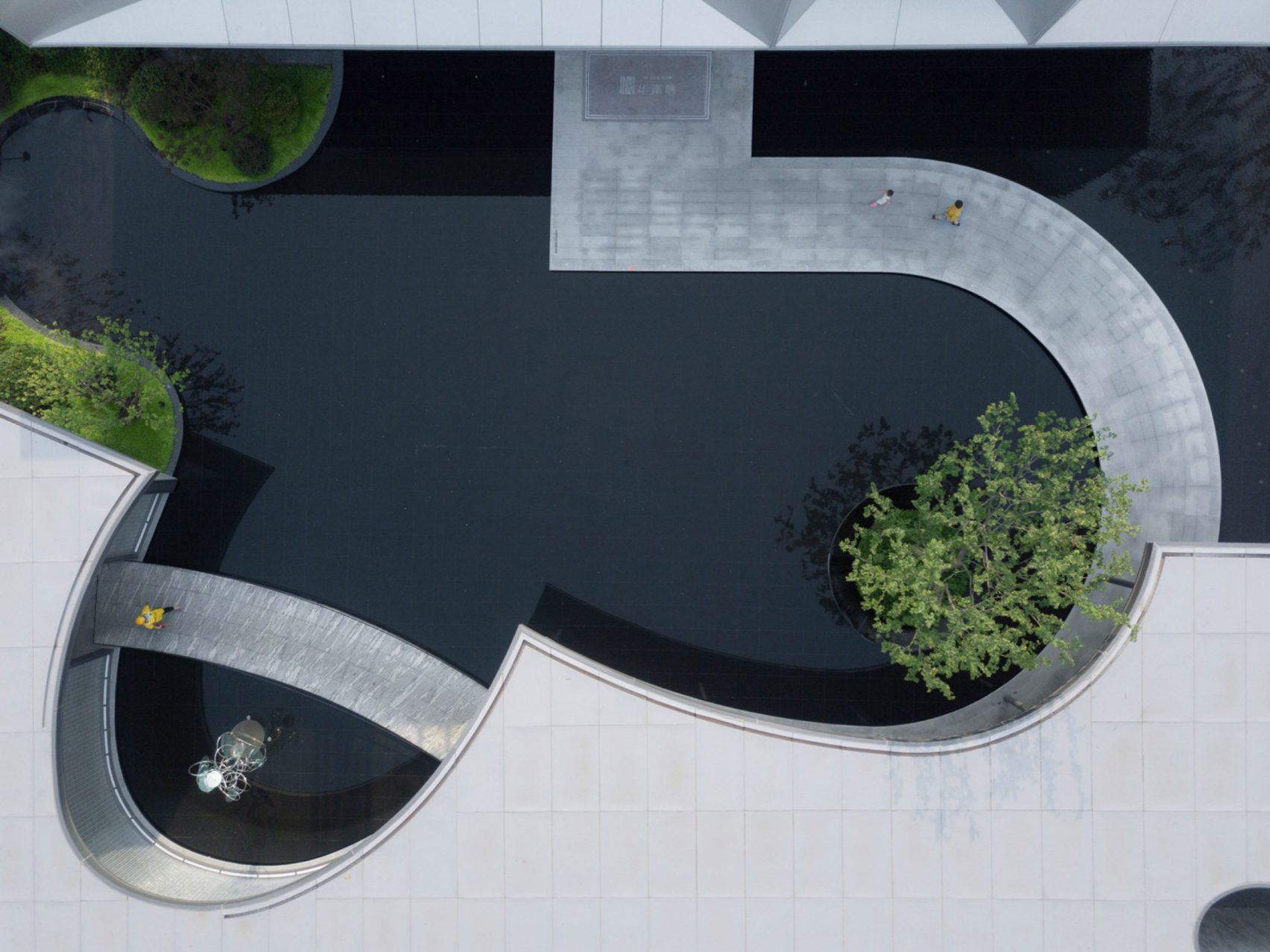
- Quite and welcoming space in a busy urban setting.
- Water paths; The presence of water was utilized to connect all six zones. To emphasize the importance of water in Danyang’s history, it flowed all the way along the route.
- The path first leads into the office building, and then from one side it leads to a large landscaped area.
- The waterscape features and S-shaped pathways make the design playful.
- The terraces located on the platforms converge along the path.
2- Vitra Campus
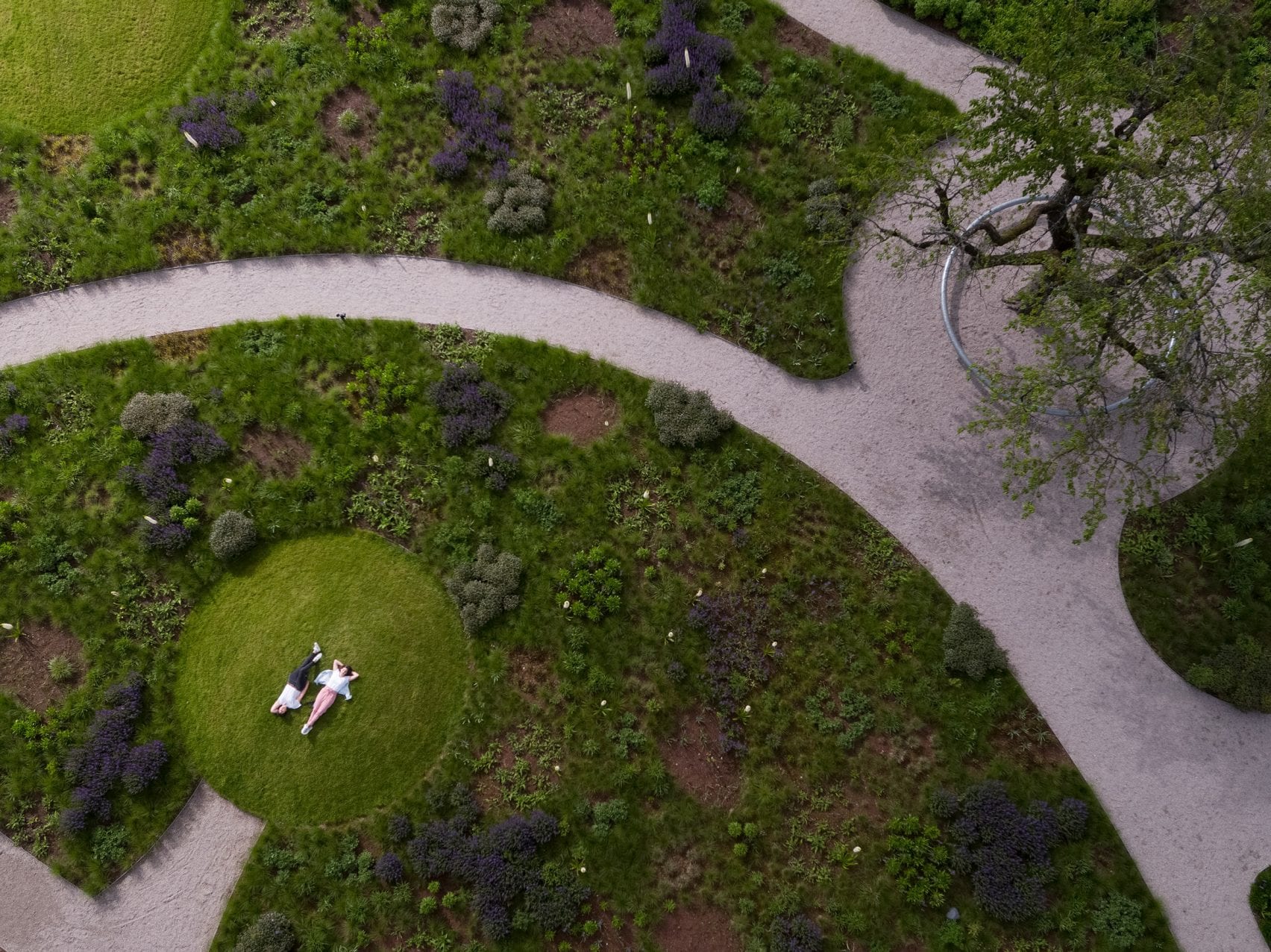
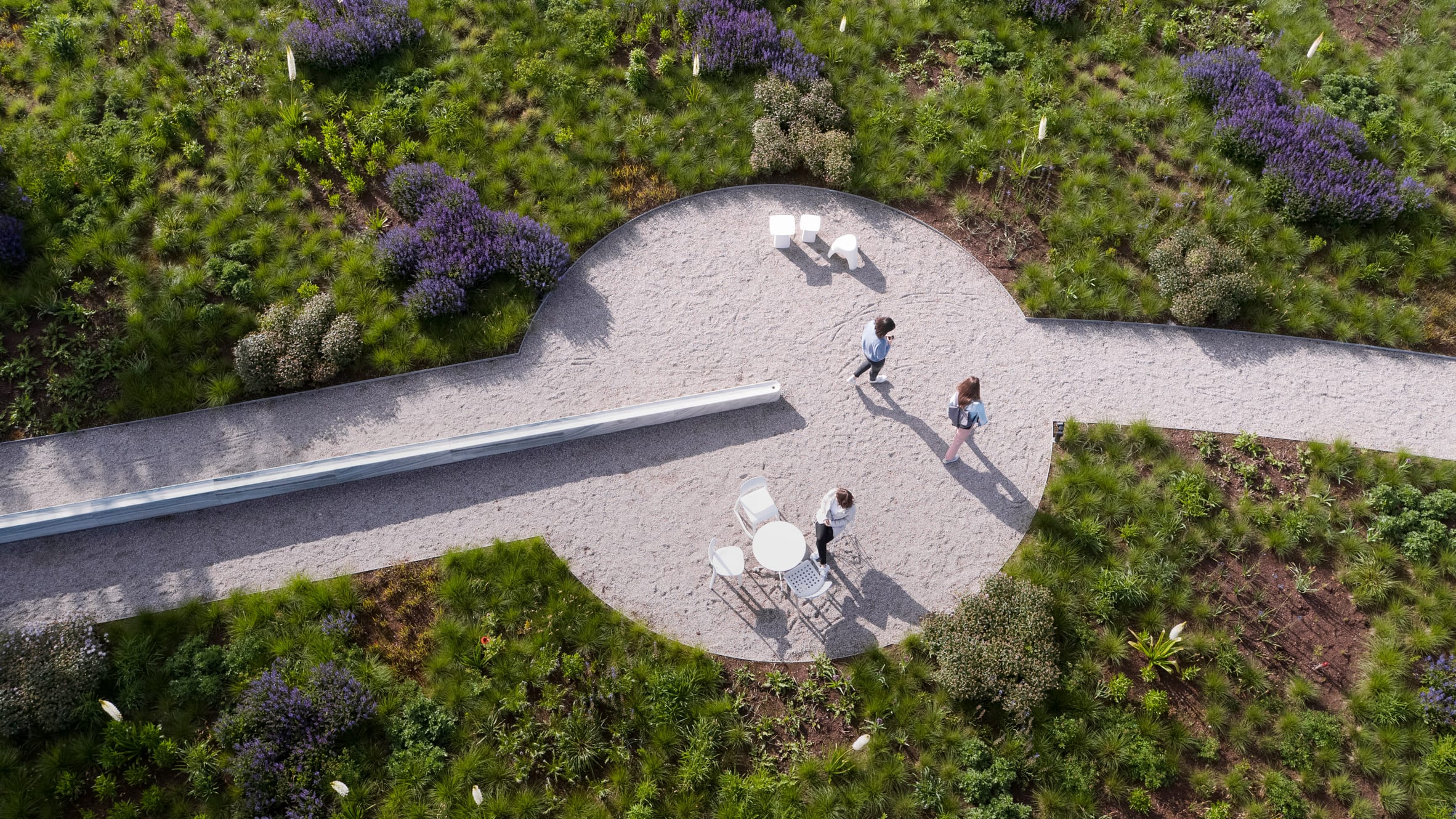
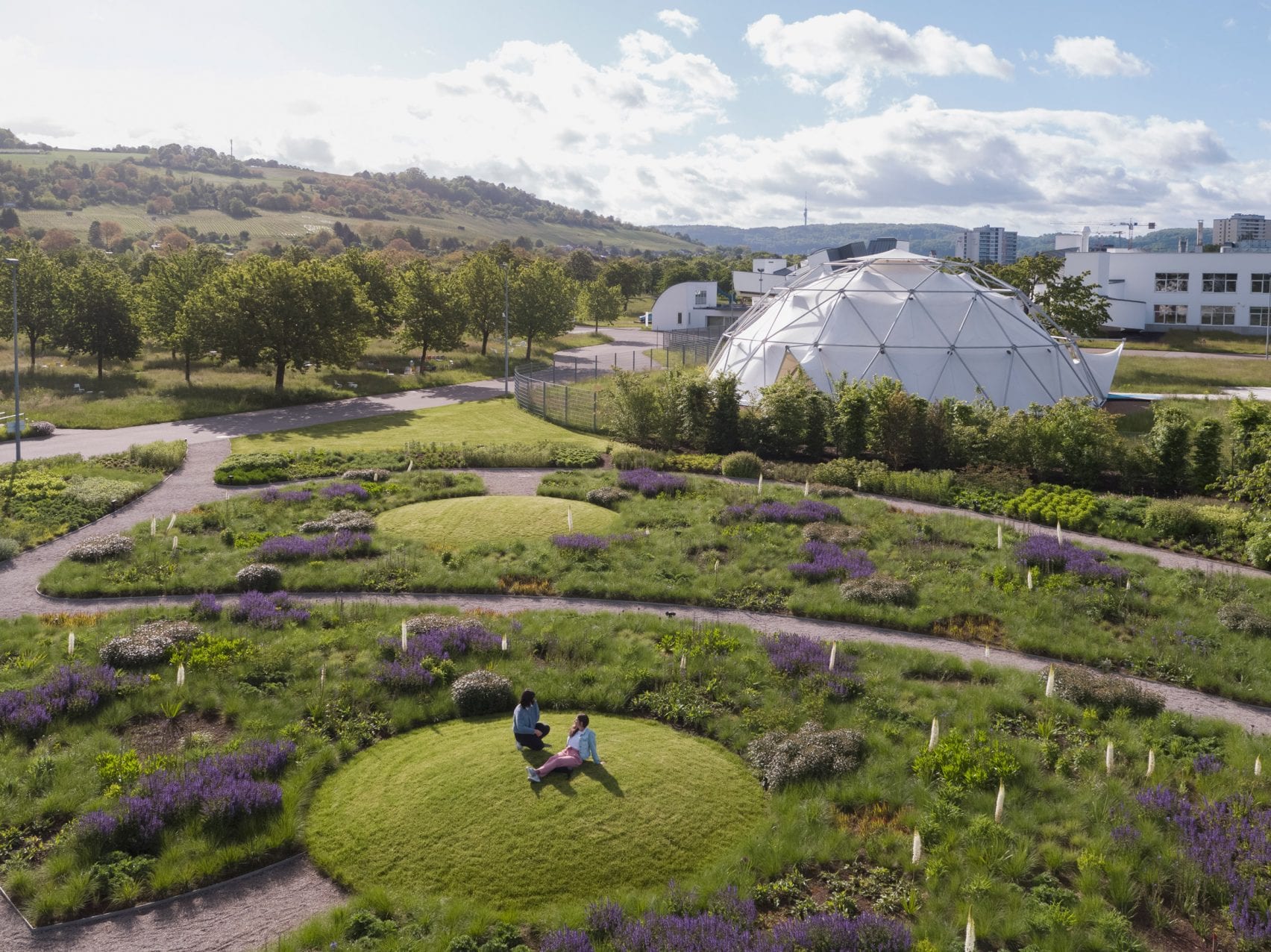
- Path connects the southern and northern sides of the campus.
- The path distracts visitors from the buildings and instead focus the plants along the path.
- Path boarded with plants provide different sensory experiences.
- “I want people to lose themselves in the garden instead of just passing through it,” says Oudolf. Instead of a direct design that shows the end of the road, the architect aimed to keep the excitement high by guiding the visitor through a journey.
3- Where the River Runs, Penda Studio
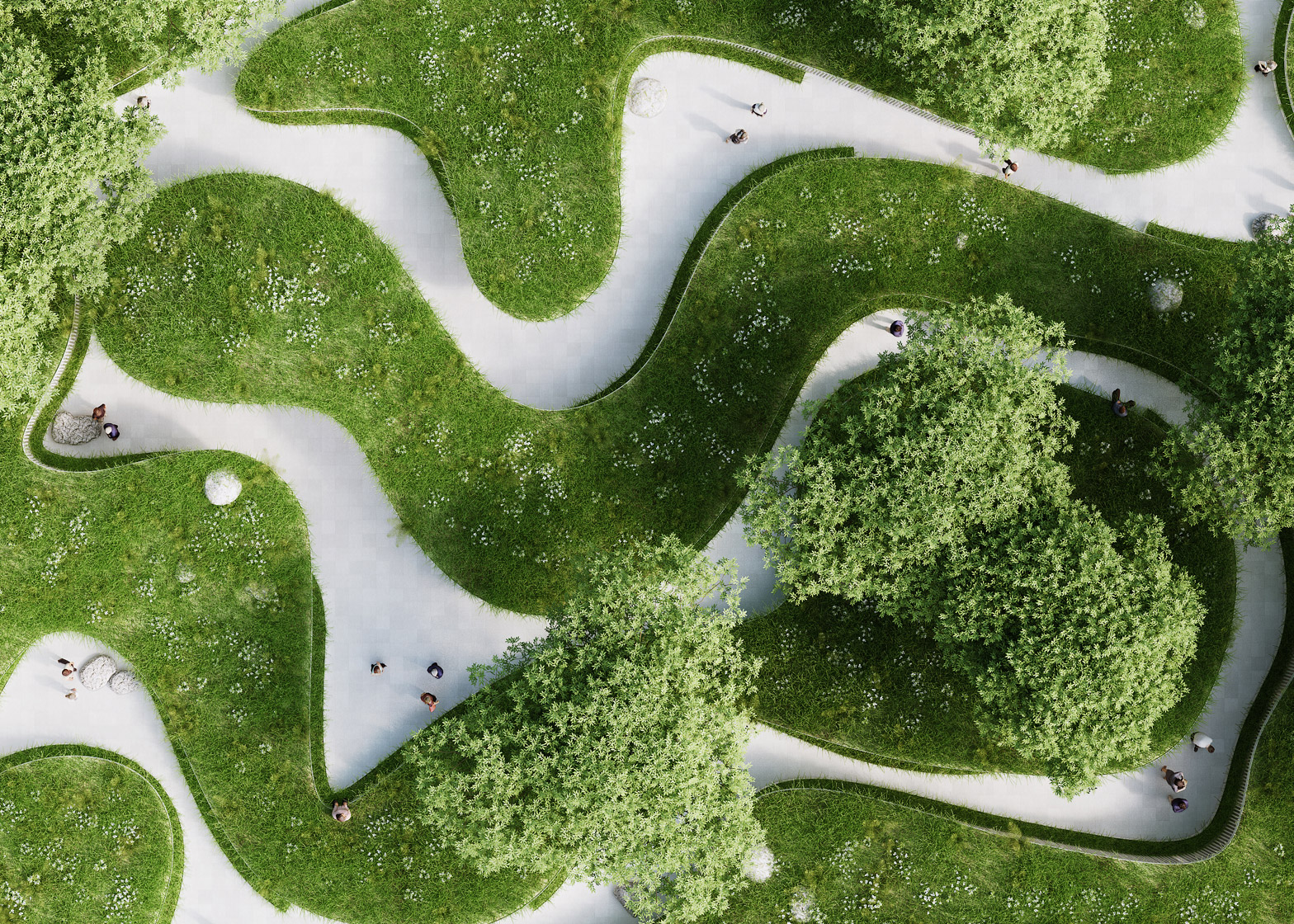
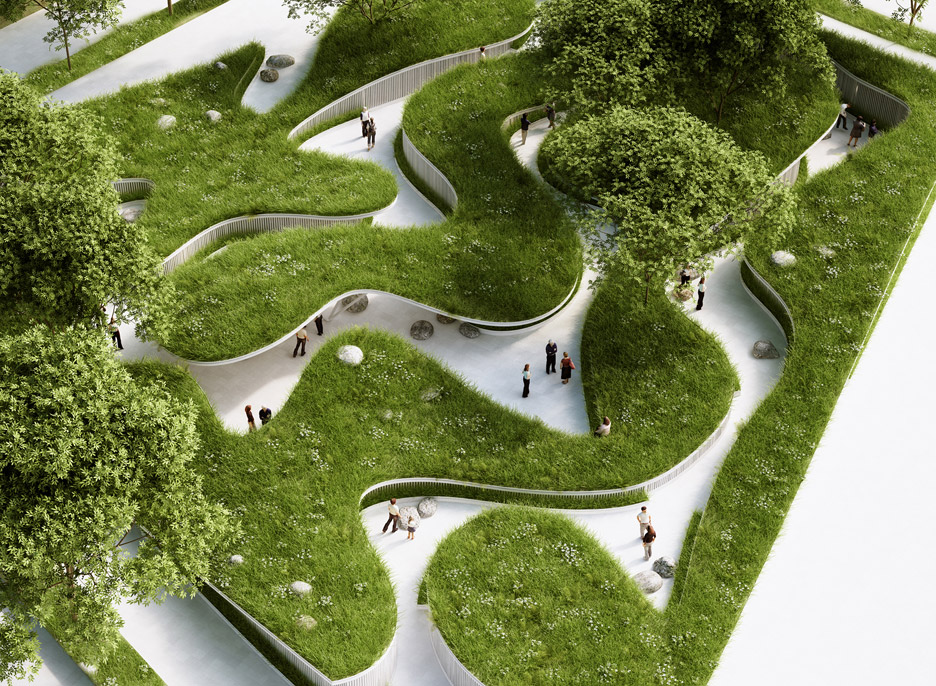
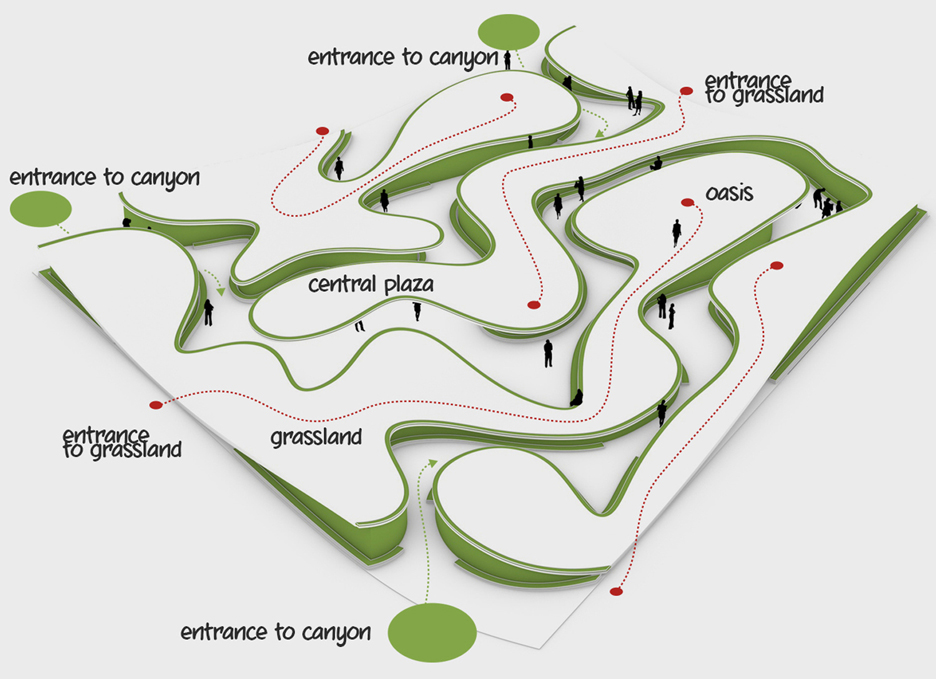
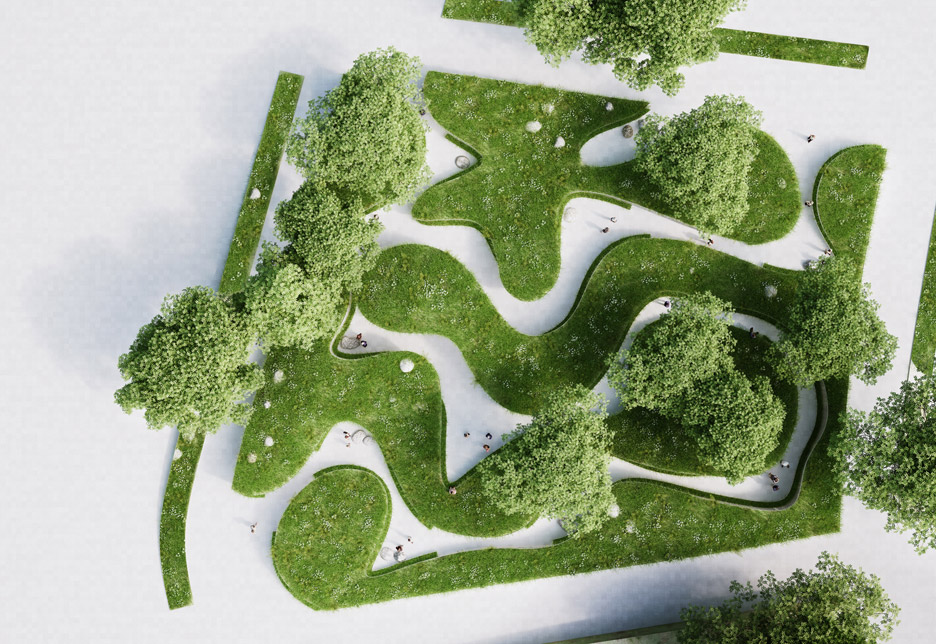
- Invite visitors to follow the path of an imaginary river as it winds its way through the landscape.
- Entrance from three different points.
- Natural, organic shapes
- Through the path, visitors are also included by spreading out seeds and let garden grow.
4- Glassfields
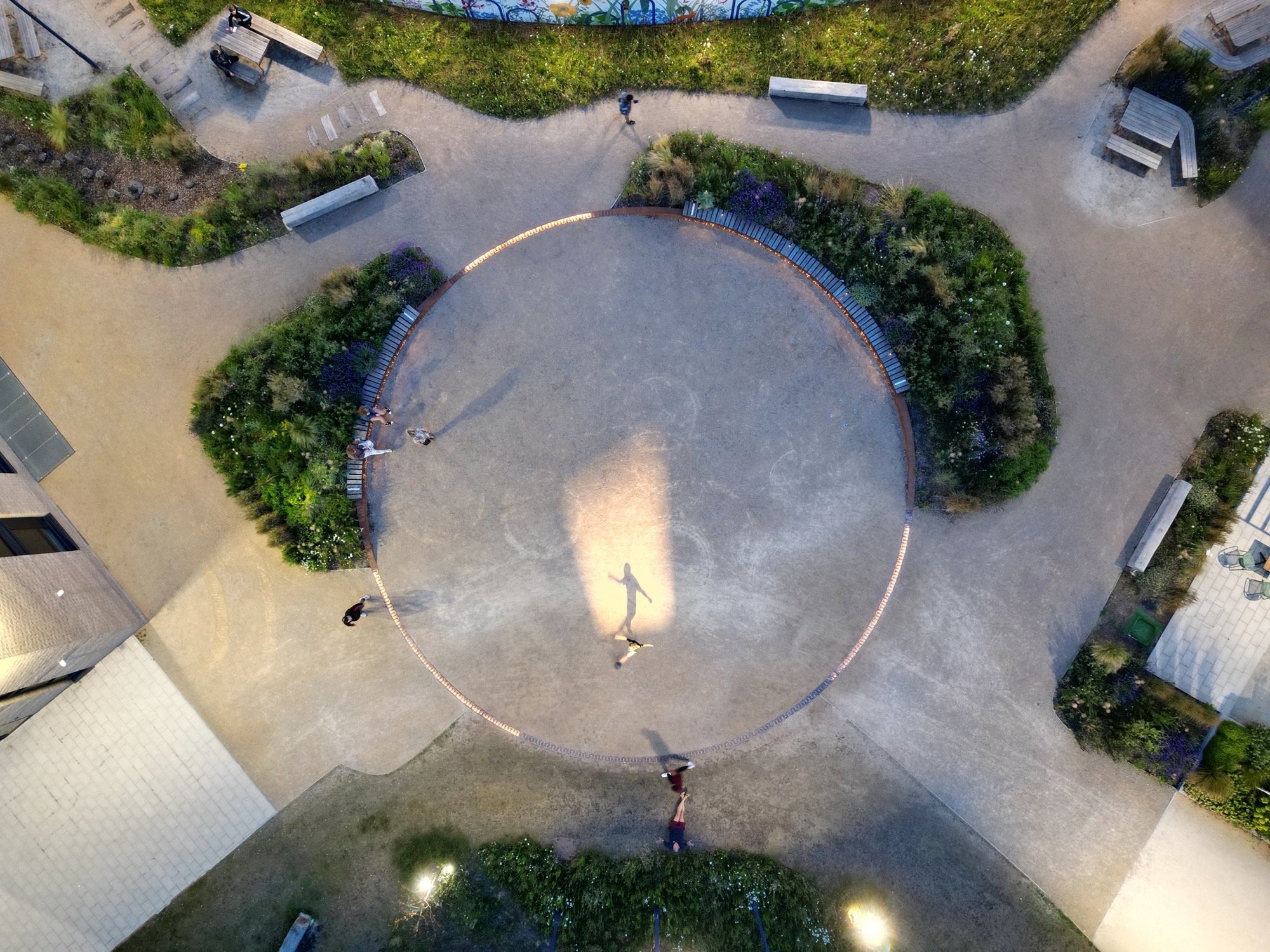
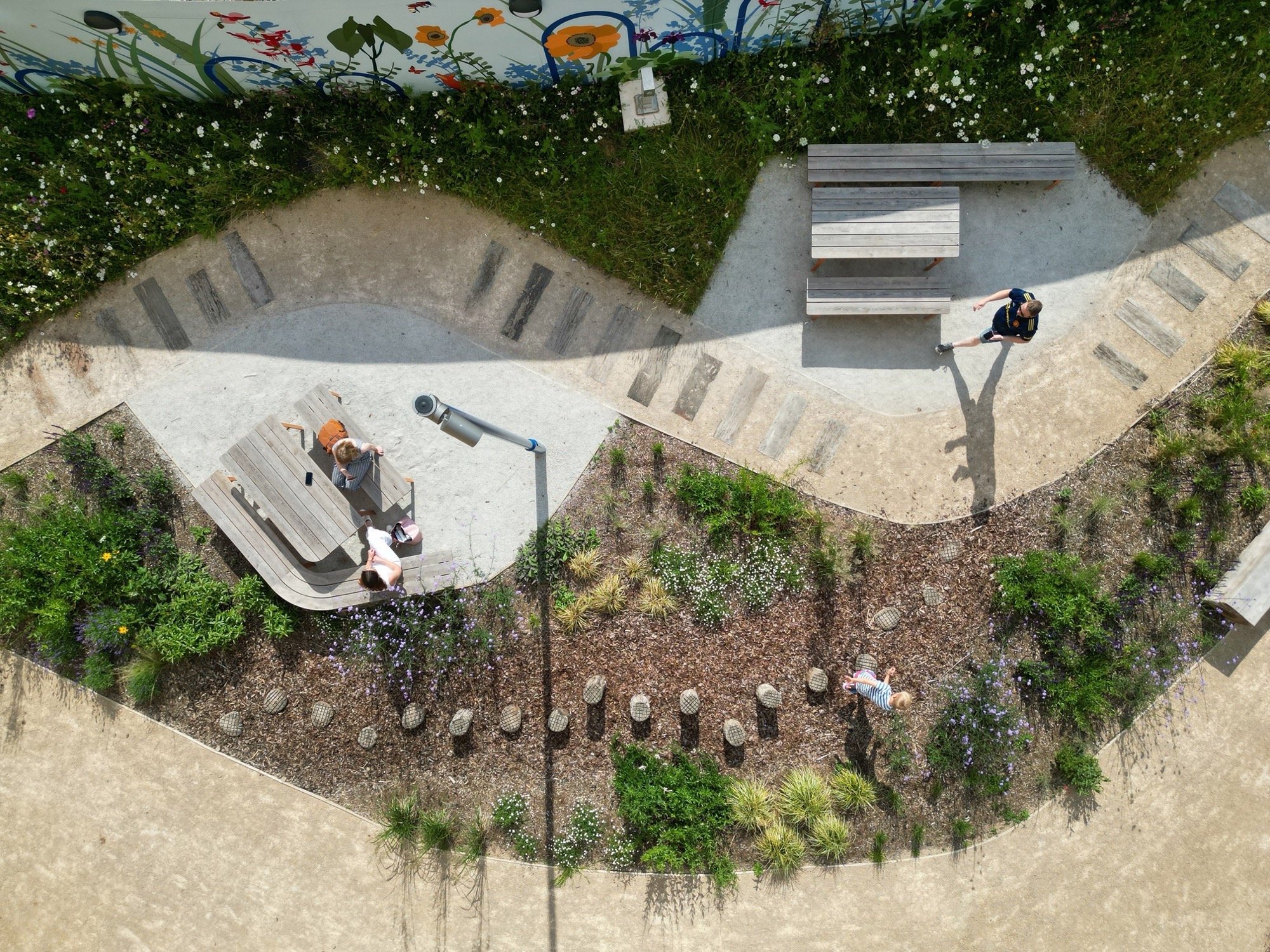
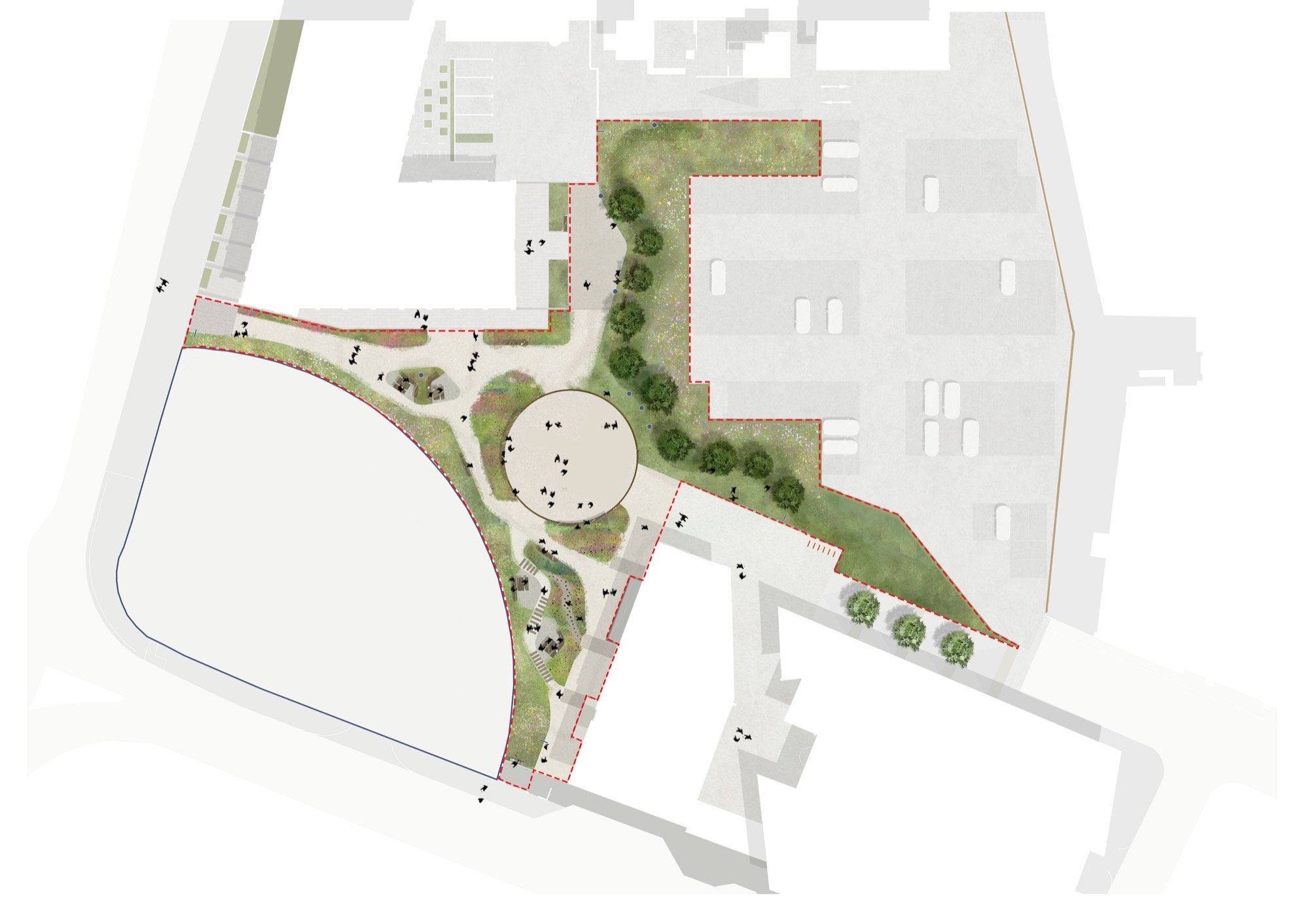
- Path designed around the central activity area.
- Three path types:
- Primary paths: main spine, connects the entrances to the central area.
- Secondary path: it branches off from the main path, providing access to landscaped areas and seating zones. It consists of narrower, more organic shapes; this path, formed among plants, offers an exploratory experience.
- Experiential path: it leads to the main center not directly, but in a playful and experiential way.
5- Carl Nielsens Allé
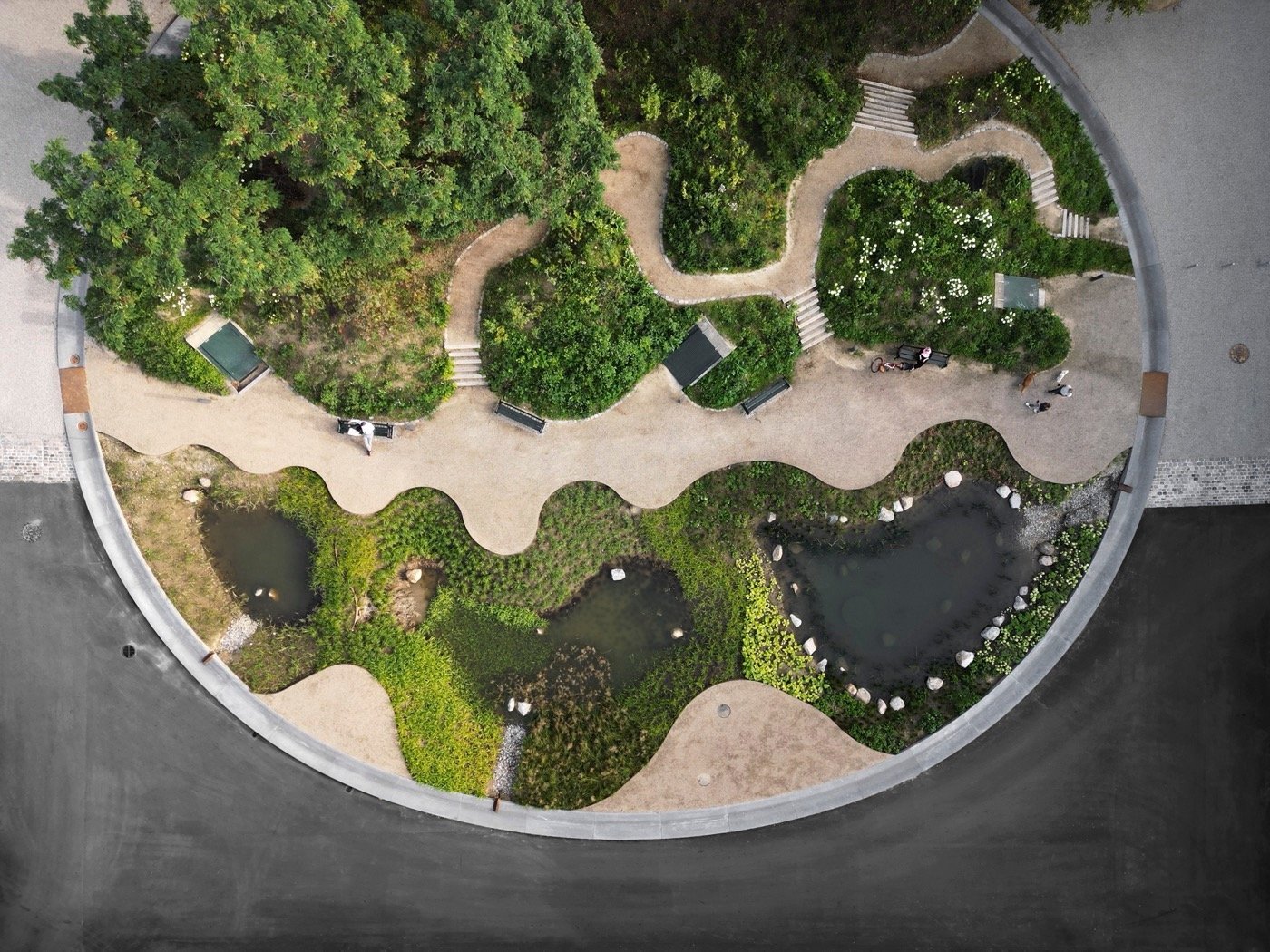
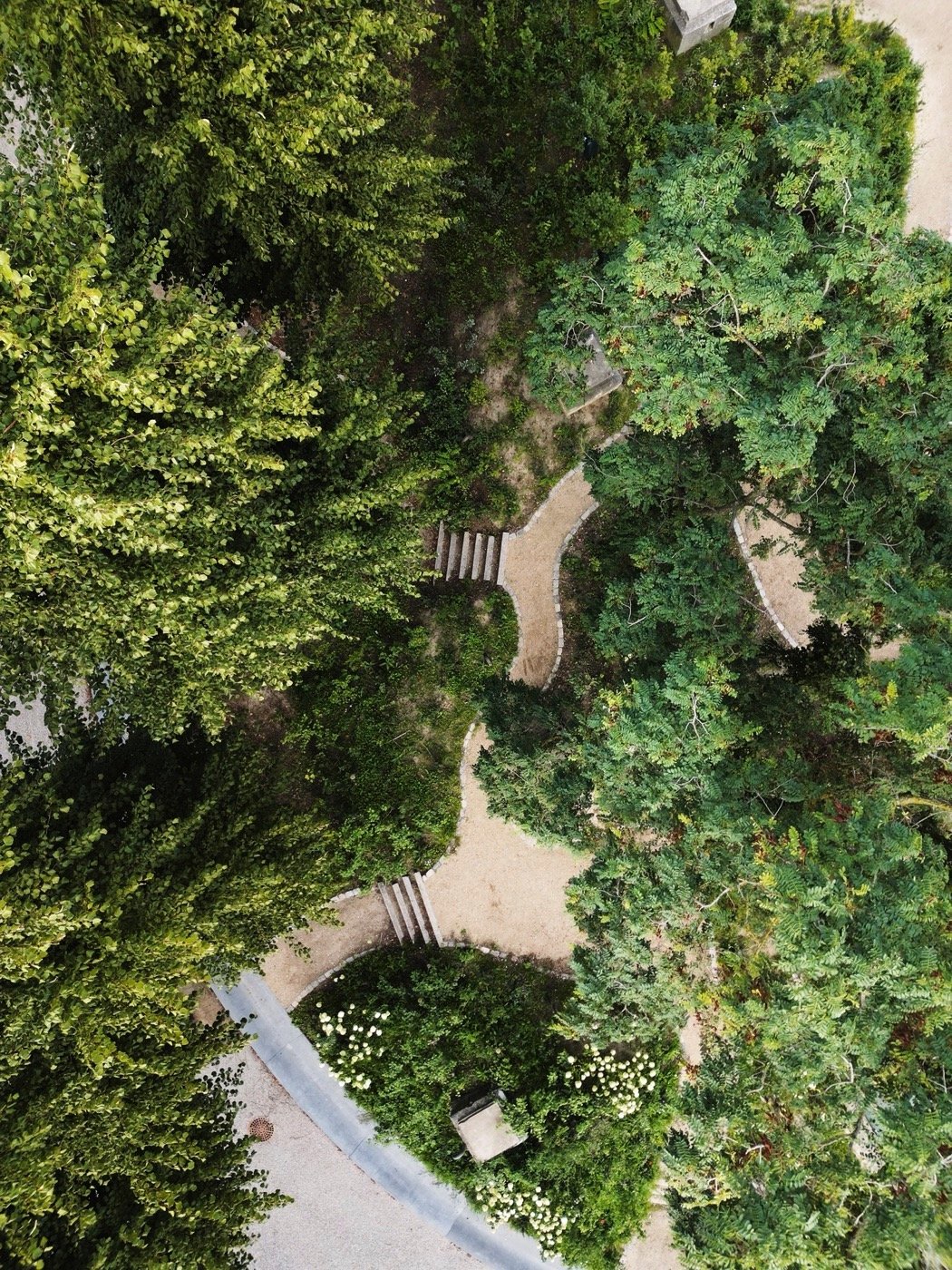
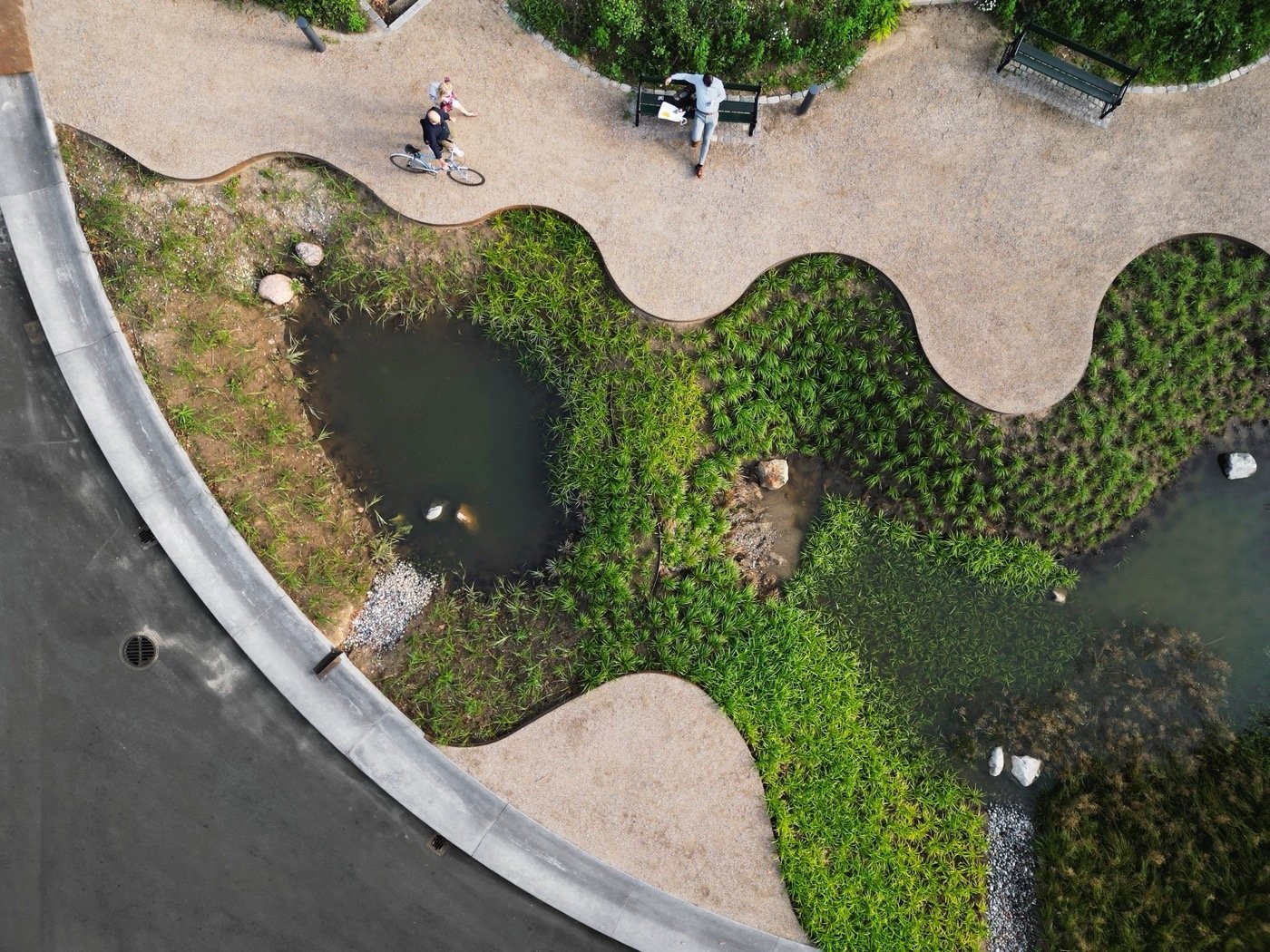
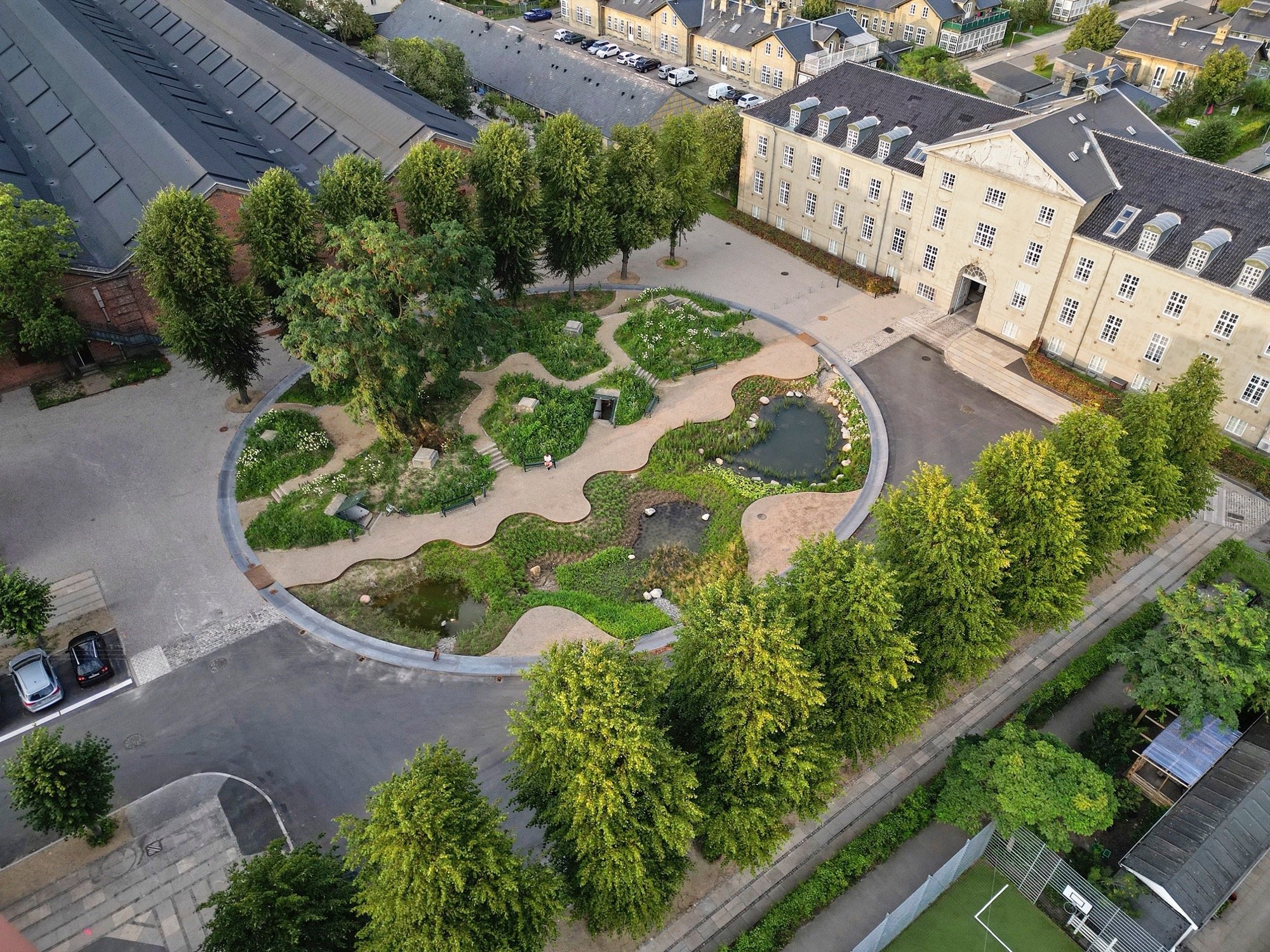
- It is formed by the main path that circles the oasis and secondary paths that connect to this chain.
- Circular, organic geometry
- The entire area is explored in an experiential way, through climate-adaptive water management practices.
- It has a non-direct, immersive orientation.
SKETCHES
Reference project – Sunac Yunyang, Qidi Design Group
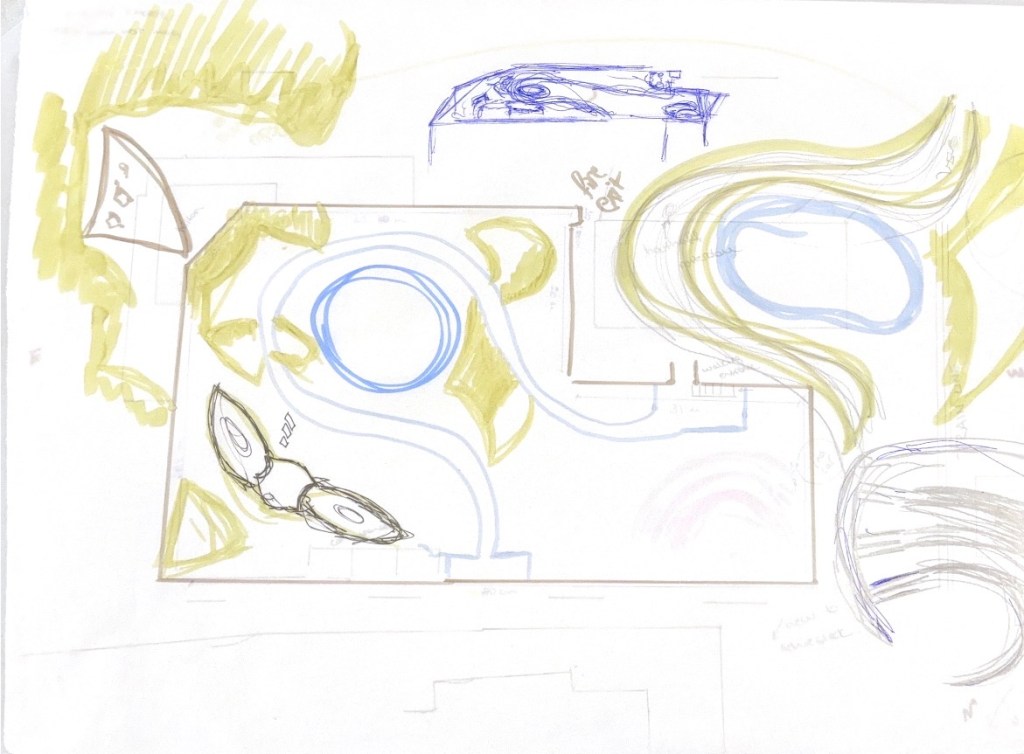
Reference: The presence of water was utilized to connect all six zones. The design also touches upon the historical importance of water, and balconies situated among the stepped water features can be found along the way.
Sketch: In the sketch, balconies with different purposes are positioned along the road amidst greenery. The aim is to create a path using natural shapes. The central water drainage system plays a key role, so it is desired that all roads lead to the center.
Reference Project – Vitra Campus
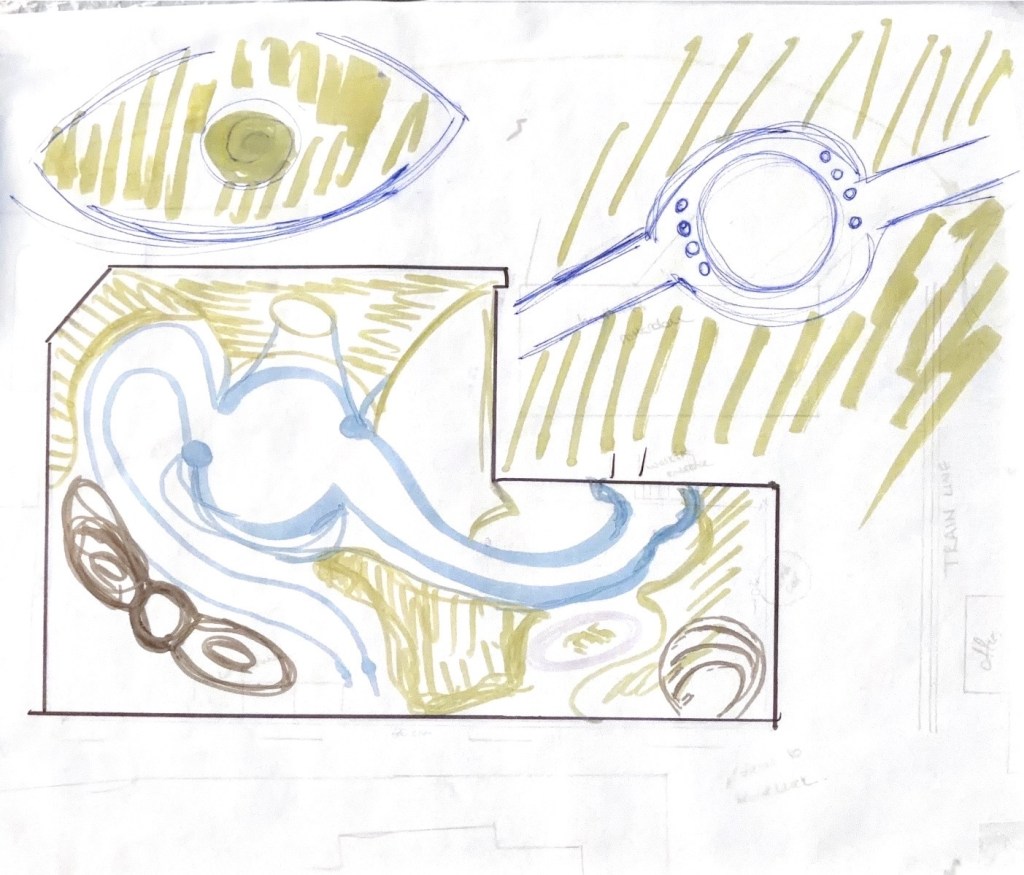
Reference: Instead of a direct design that shows the end of the road, the architect aimed to keep the excitement high by guiding the visitor through a journey. Just like a maze, the path allows the visitors to complete the way and lost themselves in the design. This design, incorporating organic shapes, has separated boundaries in a more systematic and clean way.
Sketch : In this drawing, where the boundaries are wide and clearly defined, more green space is given priority.
Reference Project – Where the River Runs, Penda Studio
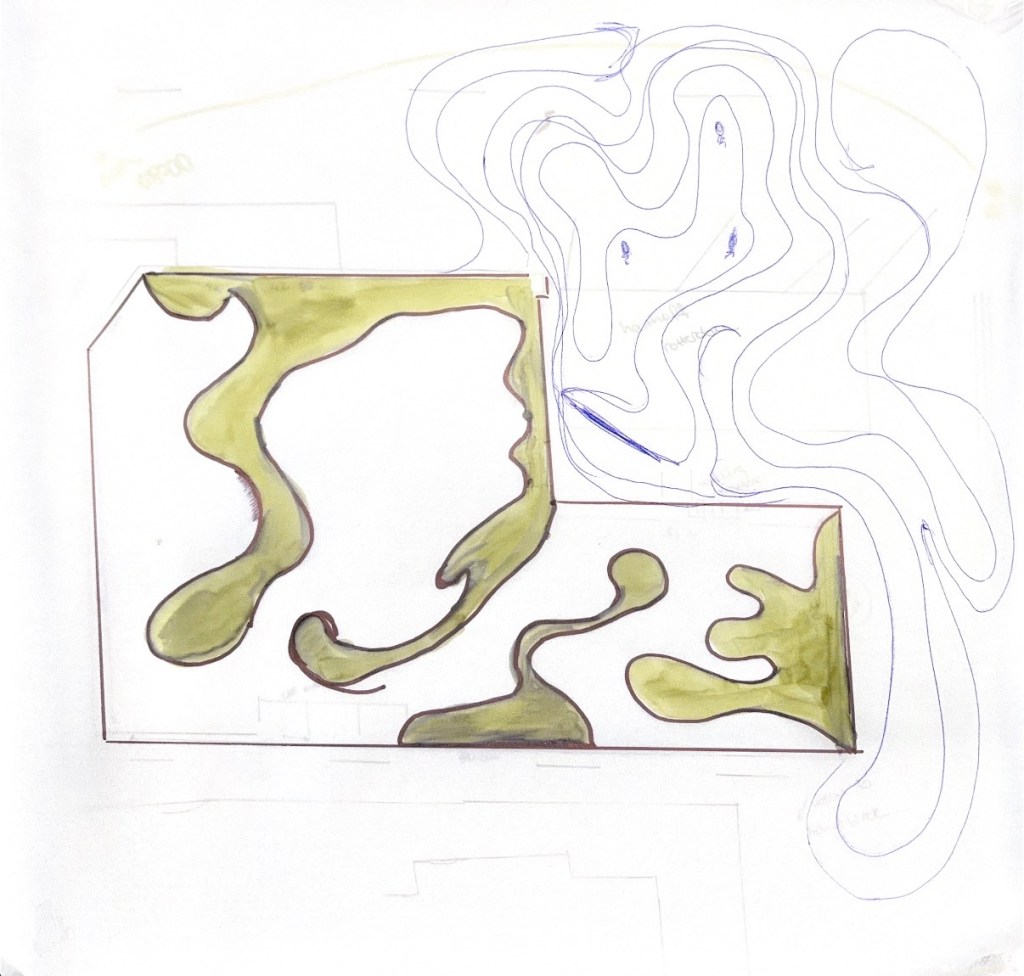
Reference: Through the interlocking shapes, the aim is to get lost in the space, to surrender to the design and stay in the moment.
Sketch: Drawn without much thought, with relaxed hand movements, this path attempts to convey a sense of getting lost by creating areas of varying widths.
Reference Project – Glassfields
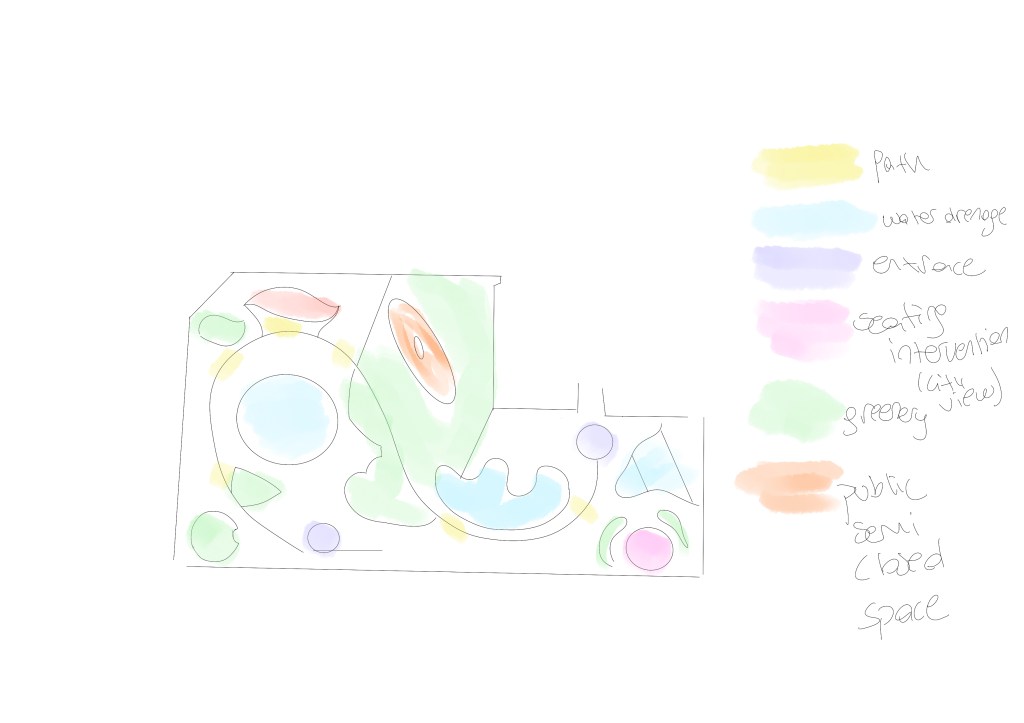
Reference: Playful and experiential path. Invites people to explore through the way, however at the end all the paths end in the central area.
Sketch: The work includes many elements, which are spread around the area in a playful way.
Reference Project – Carl Nielsens Allé
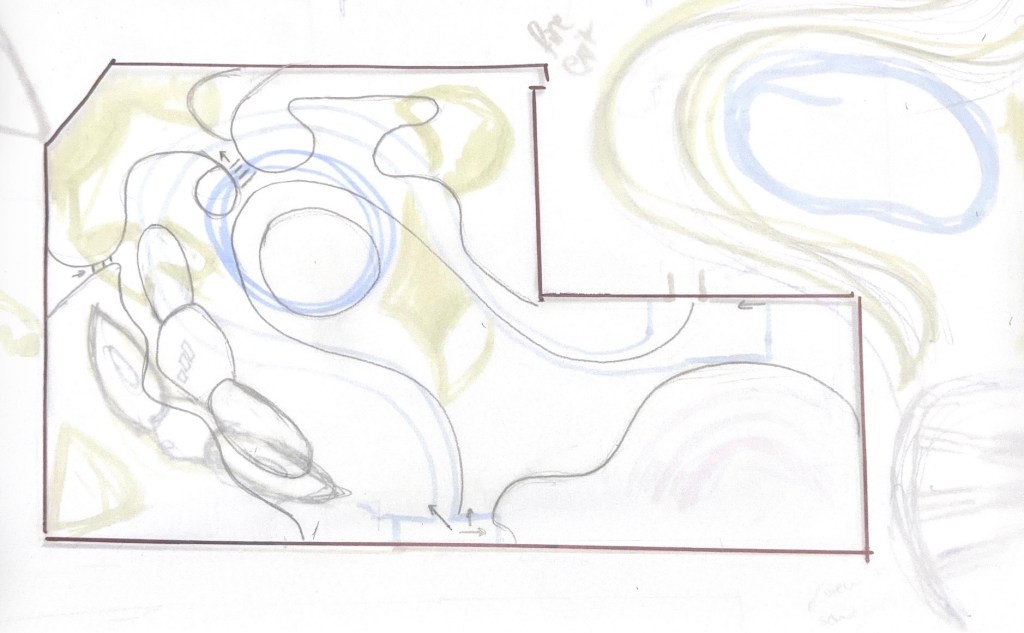
Reference: Despite having a central area, the back features interesting and varied elevation differences that encourage exploration. It features a circular and natural design.
Sketch: The paths lead to various gardens accessible via small steps, as well as balconies. A drainage system is located in the center, and access is also provided to the adjacent event area.
 ROOFTOP RESEARCH & DESIGN