WHY
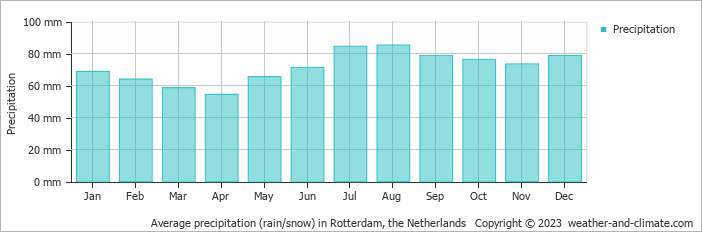
The research is based on my past work, which I didn’t have time to research in detail, including the addition of water reservoirs to public and living space designs, as well as our installation design for the future of Rotterdam. I combined this futuristic approach with a sustainability theme, taking future conditions into account. With a large part of the Netherlands located below sea level, it is predicted that between 2050 and 2100, sea levels will rise by approximately 1 meter due to global warming, increasing the risk of flooding, and therefore the city needs to move towards a new design plan for the future. Looking at Rotterdam’s history, the city was built on arid land and dikes. After the 1953 flood, strong protective measures were implemented, including advanced drainage and pumping systems. While water drainage systems cover a large portion of the underground infrastructure, they can sometimes prove insufficient, such as during heavy rainfall leading to sewage overflows, or in grey water systems where clean water has to be transported for treatment over kilometers, resulting in waste.
HOW
In the design being worked on, water collected from paths falling downhill or directly from above is filtered by plants within the drainage basin. Some of the water mixes with the soil to meet its needs, while some evaporates and returns to nature. The excess water is either stored and released in a controlled manner or distributed to homes as grey water through drainage channels, minimizing both transportation and unnecessary energy consumption.
Benefits:
- Prevents flooding
- Replenishes groundwater
- Reduces sewage load
- Creates habitats
- Increases biodiversity
- Provides adaptation to climate change
‘delay, store, infiltrate, then drain’
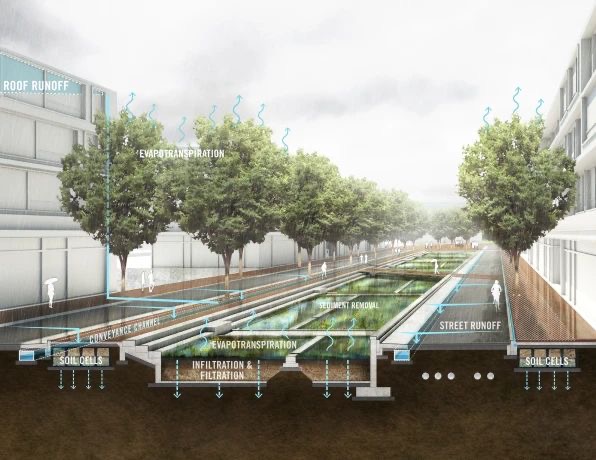
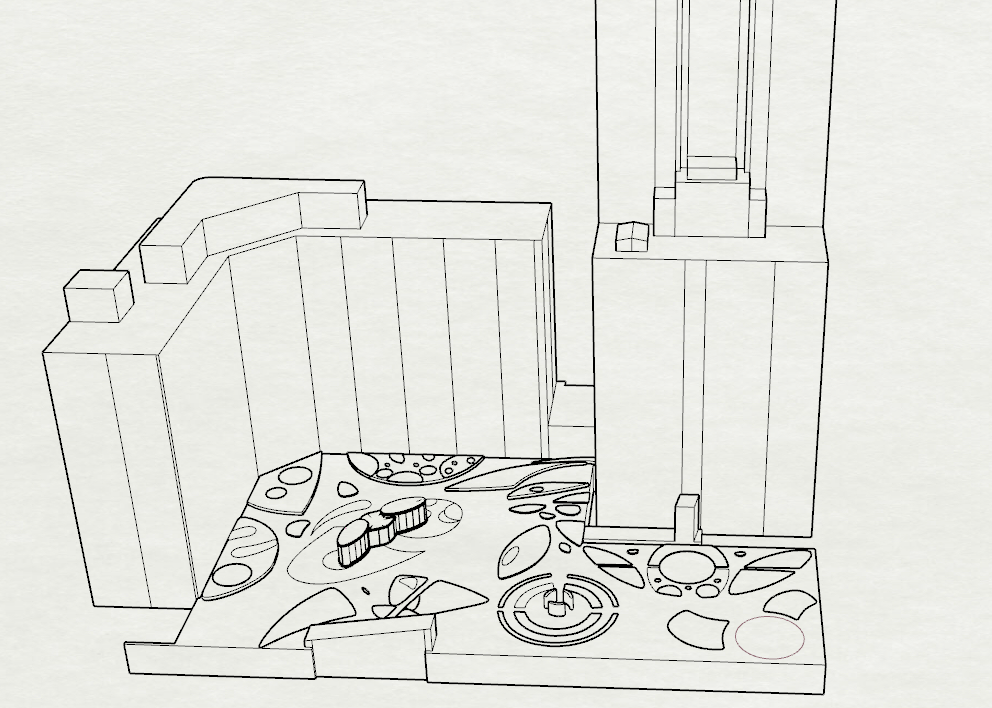
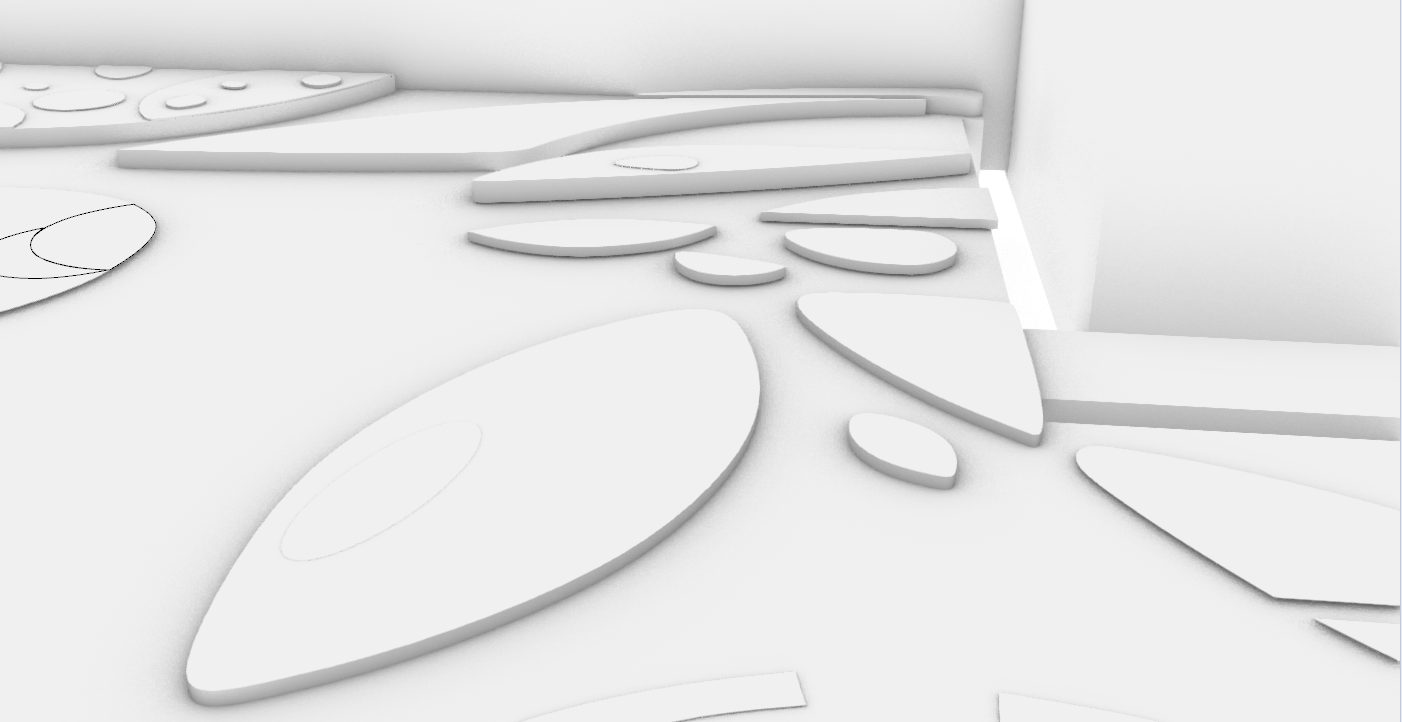
The pool features a floating area designed in a futuristic style. This area will host educational/informative trainings and workshops about the future and water drainage systems, while surrounding it are interactive gardens at different levels that utilize systematic geometric shapes. The rooftop includes 5 zones.
- Infinity garden
- Education center
- Maze
- Silent garden
- Cityscape seating area
WHAT
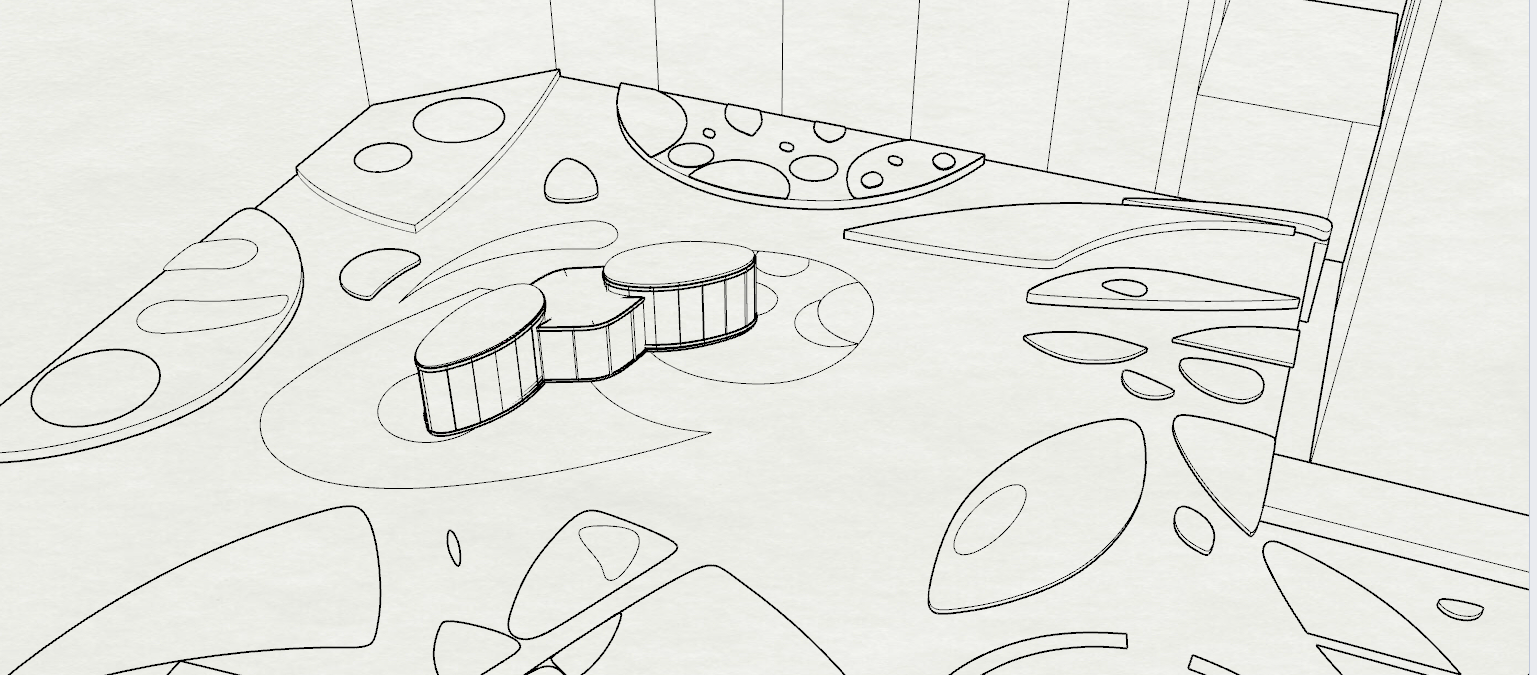
Rooftop is a public space that focuses on the future of Rotterdam, is interactive, educational, sustainable, social, and beneficial to the city’s infrastructure. Landscape architecture consists of plants suitable for all four seasons, capable of withstanding extreme drought and rainfall. This garden system attempts to create a geometric area, dividing the path with these geometric shapes.
Calculations
One square meter stores one liter of water; the designed water reservoir is 140 square meters.
Energy Consumption:
Just like in Dak Akker, a smart system is needed for the controlled drainage of water. Unlike passive systems, active systems (for controlled drainage) require very little energy, but because the water does not need to be pumped back, more energy is not required.
 ROOFTOP RESEARCH & DESIGN