REFERENCE PROJECTS – PATHS
1- Sunac Yunyang, Qidi Design Group
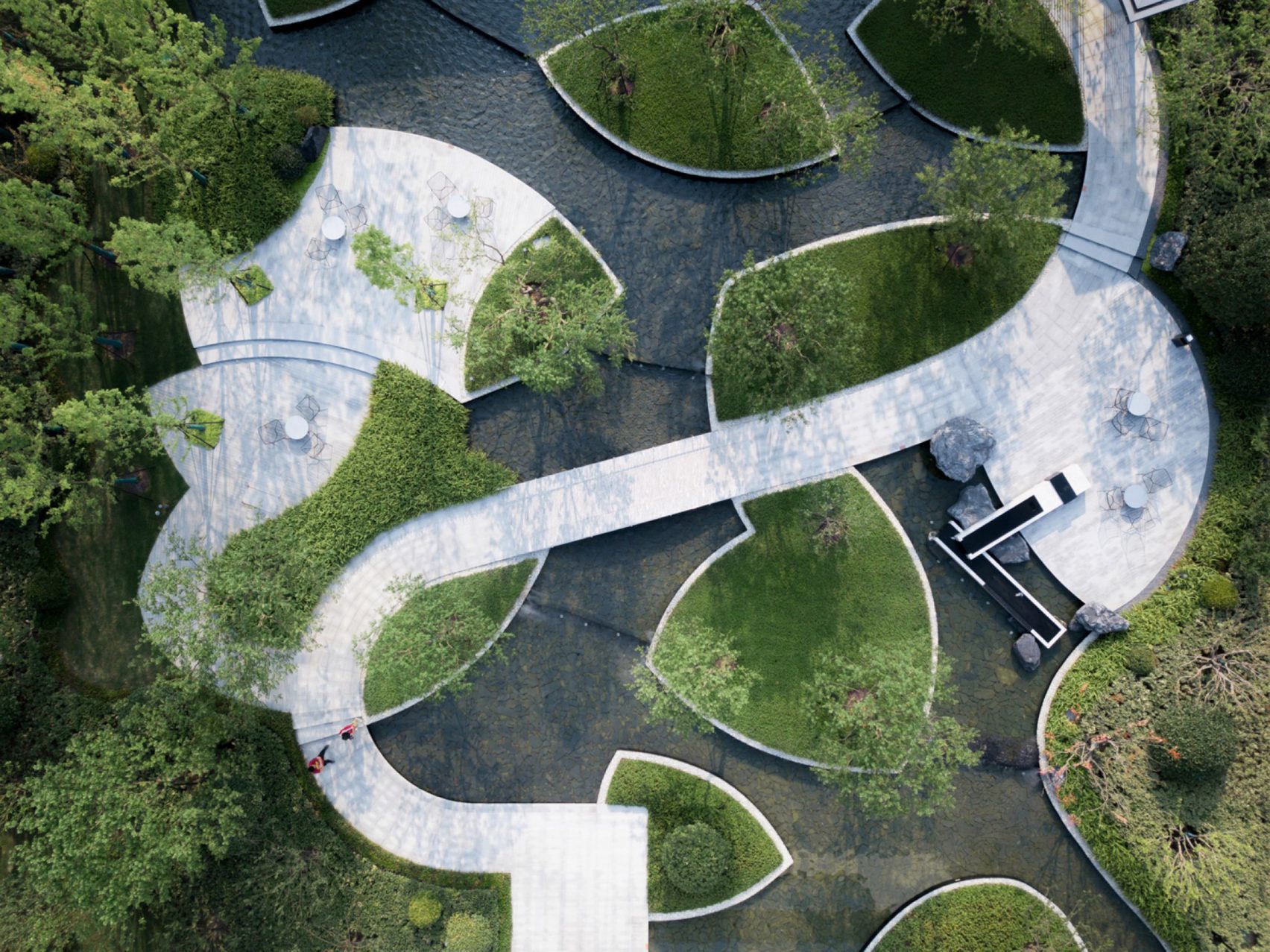
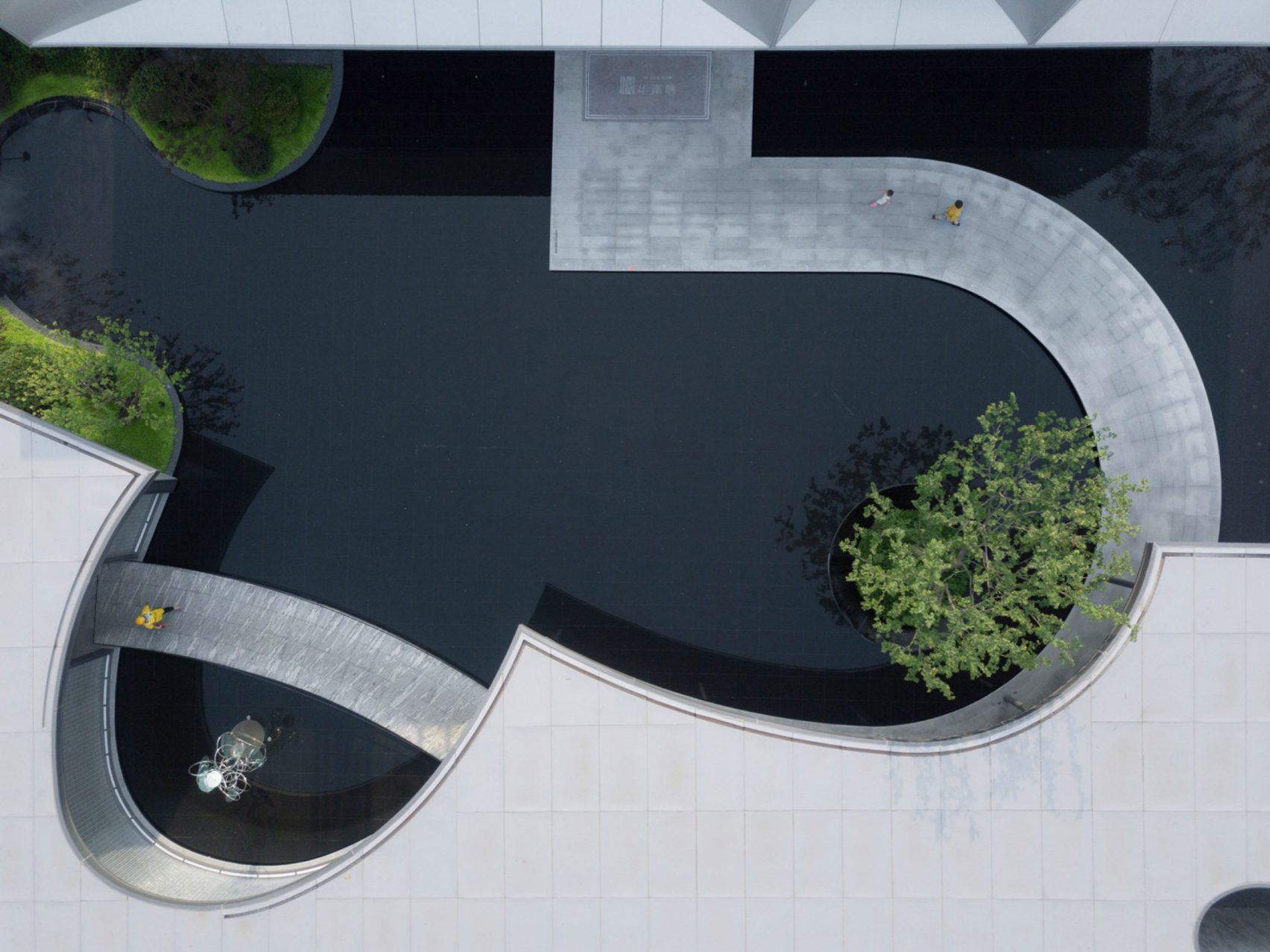
- Quite and welcoming space in a busy urban setting.
- Water paths; The presence of water was utilized to connect all six zones. To emphasize the importance of water in Danyang’s history, it flowed all the way along the route.
- The path first leads into the office building, and then from one side it leads to a large landscaped area.
- The waterscape features and S-shaped pathways make the design playful.
- The terraces located on the platforms converge along the path.
2- Vitra Campus
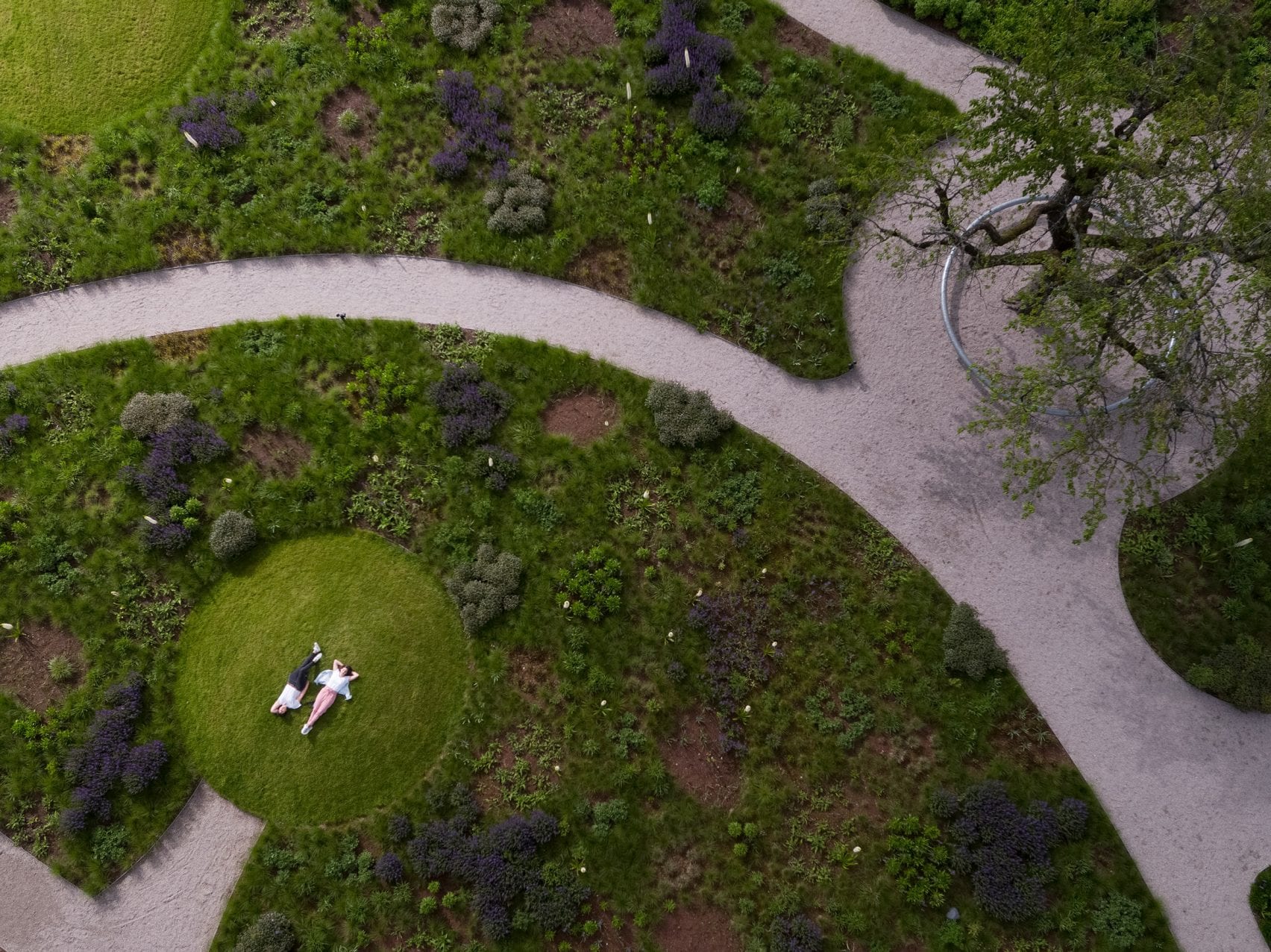
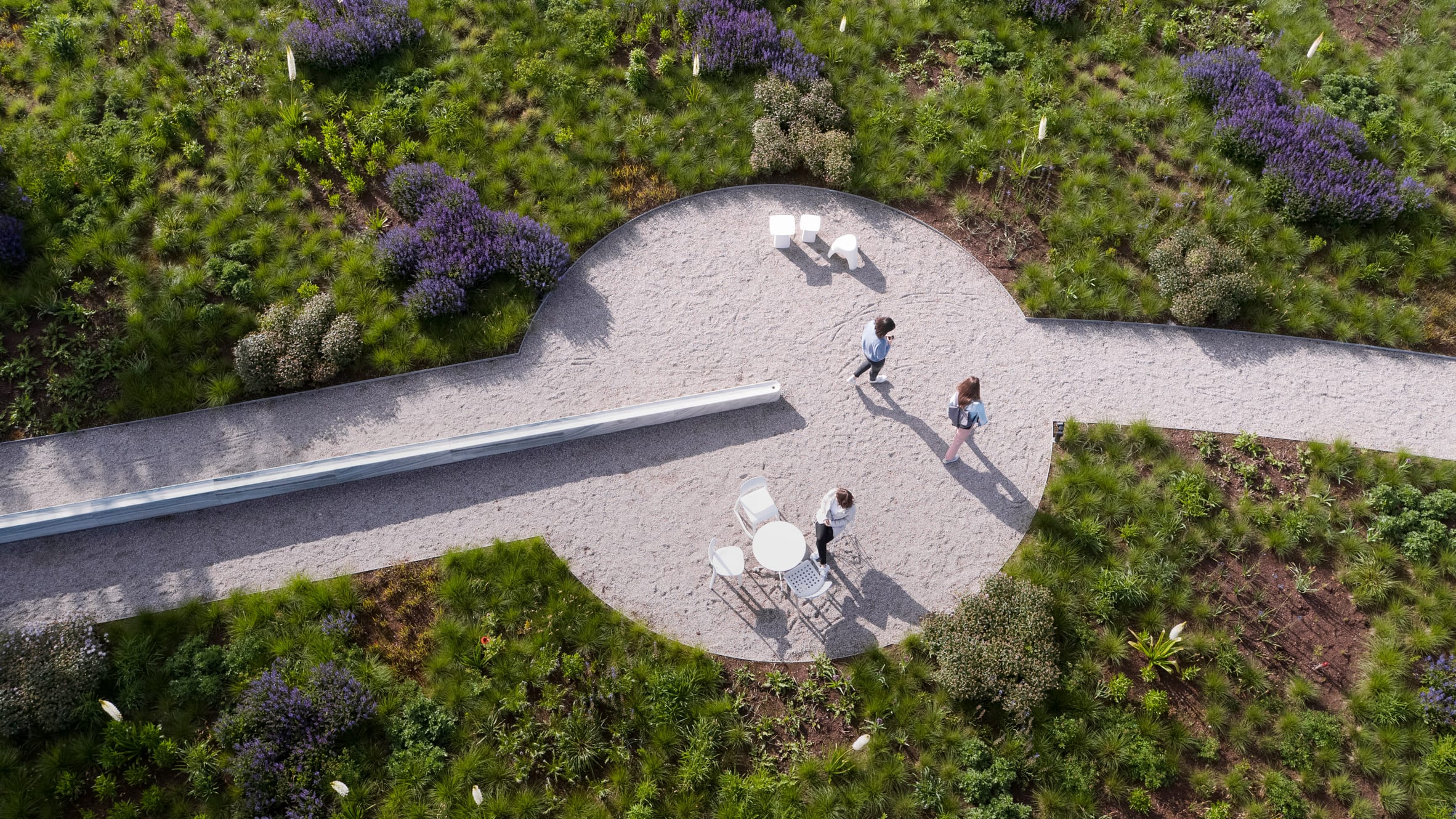
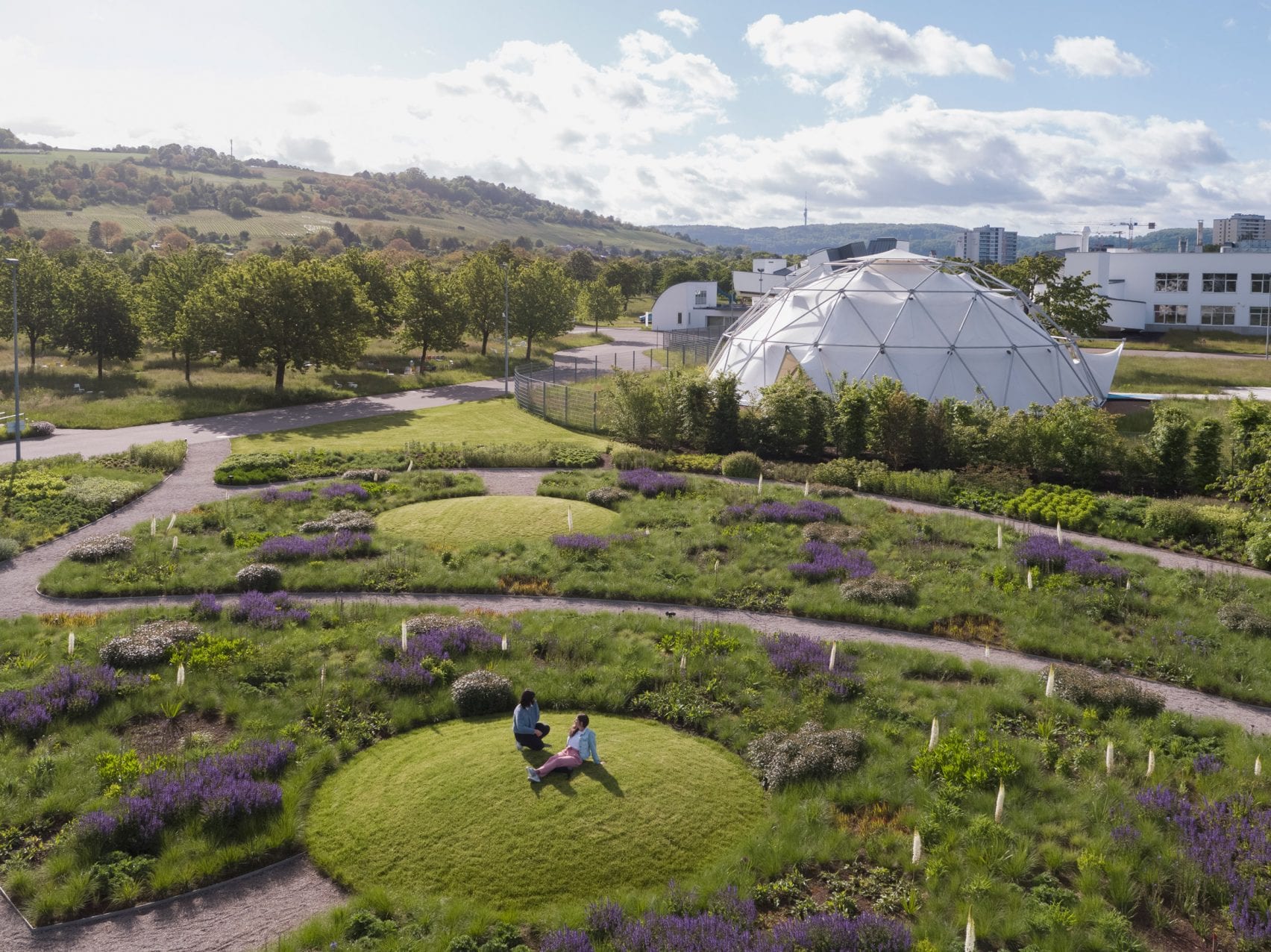
- Path connects the southern and northern sides of the campus.
- The path distracts visitors from the buildings and instead focus the plants along the path.
- Path boarded with plants provide different sensory experiences.
- “I want people to lose themselves in the garden instead of just passing through it,” says Oudolf. Instead of a direct design that shows the end of the road, the architect aimed to keep the excitement high by guiding the visitor through a journey.
3- Where the River Runs, Penda Studio
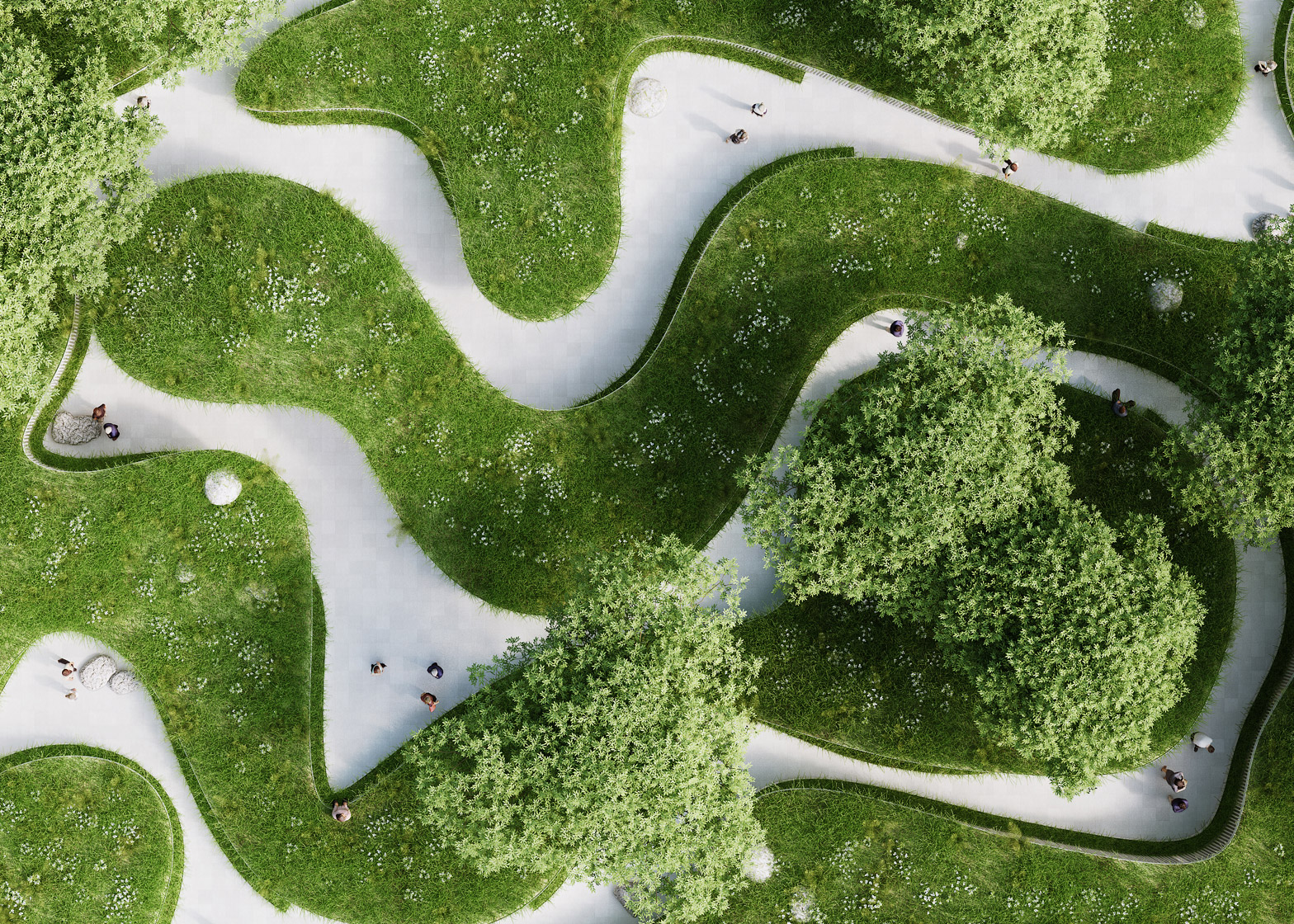
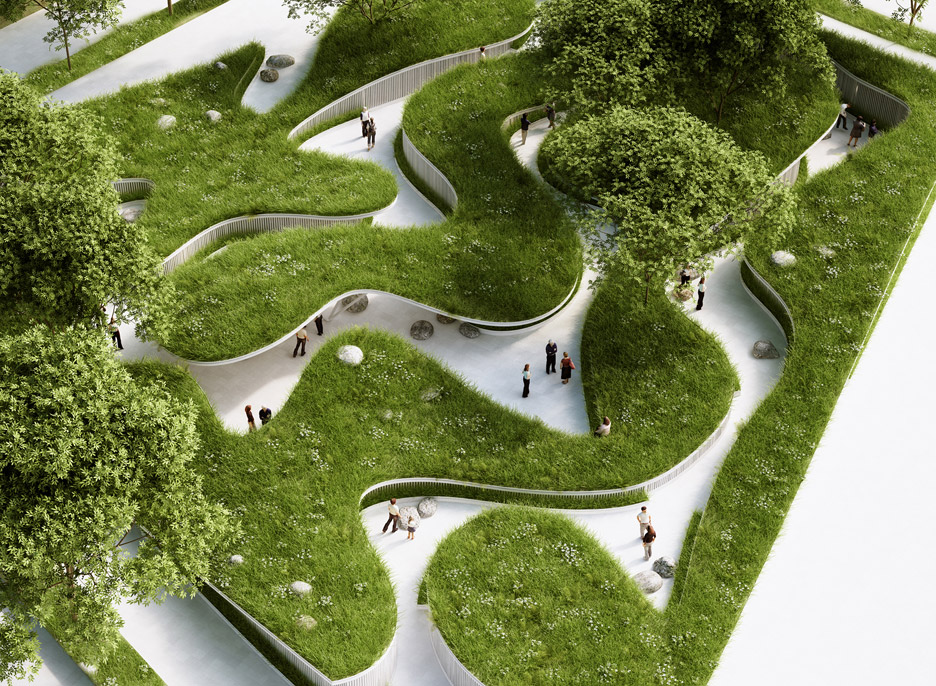
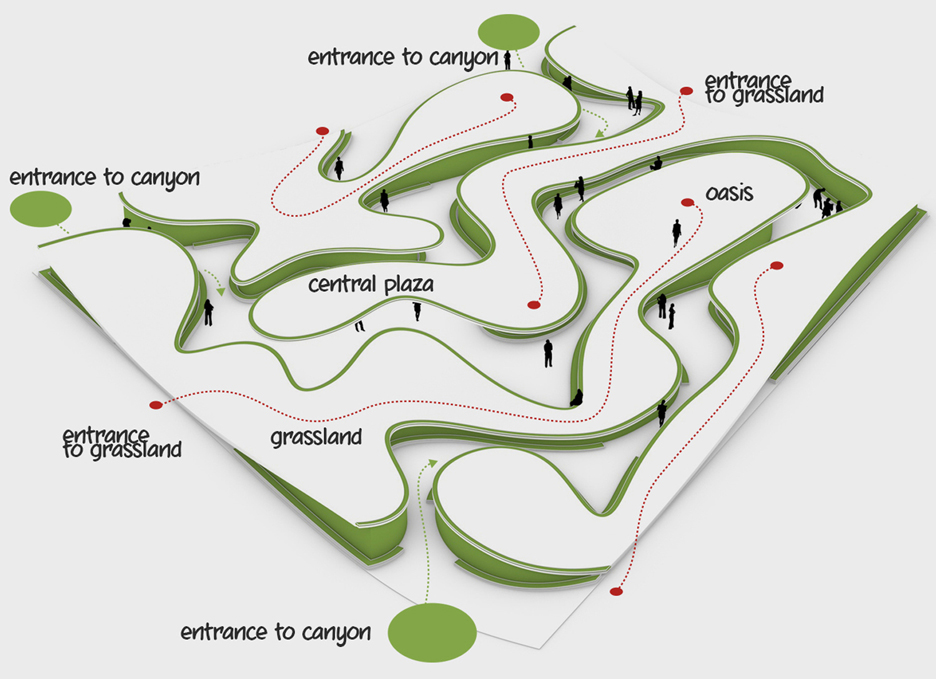
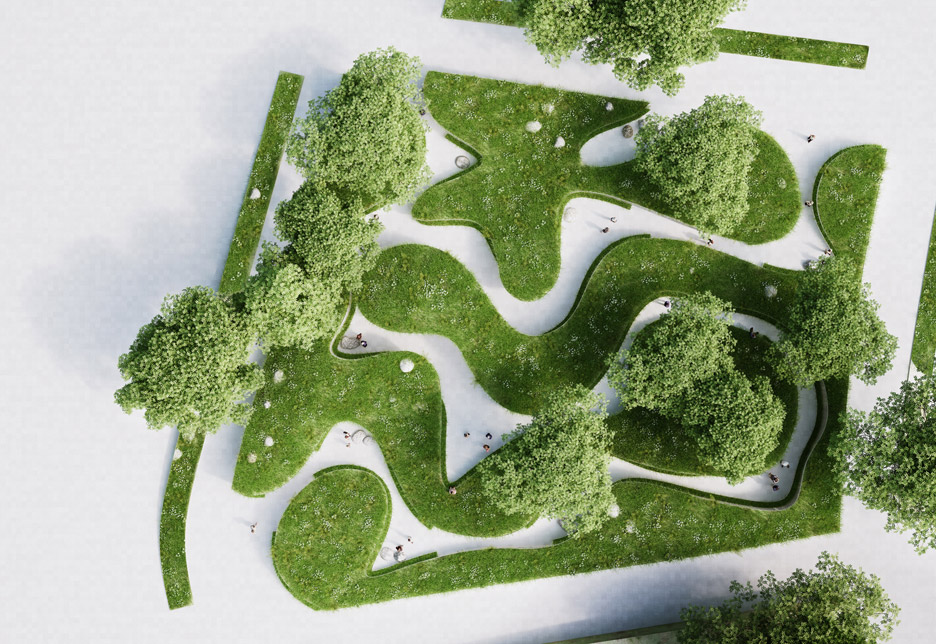
- Invite visitors to follow the path of an imaginary river as it winds its way through the landscape.
- Entrance from three different points.
- Natural, organic shapes
- Through the path, visitors are also included by spreading out seeds and let garden grow.
4- Glassfields
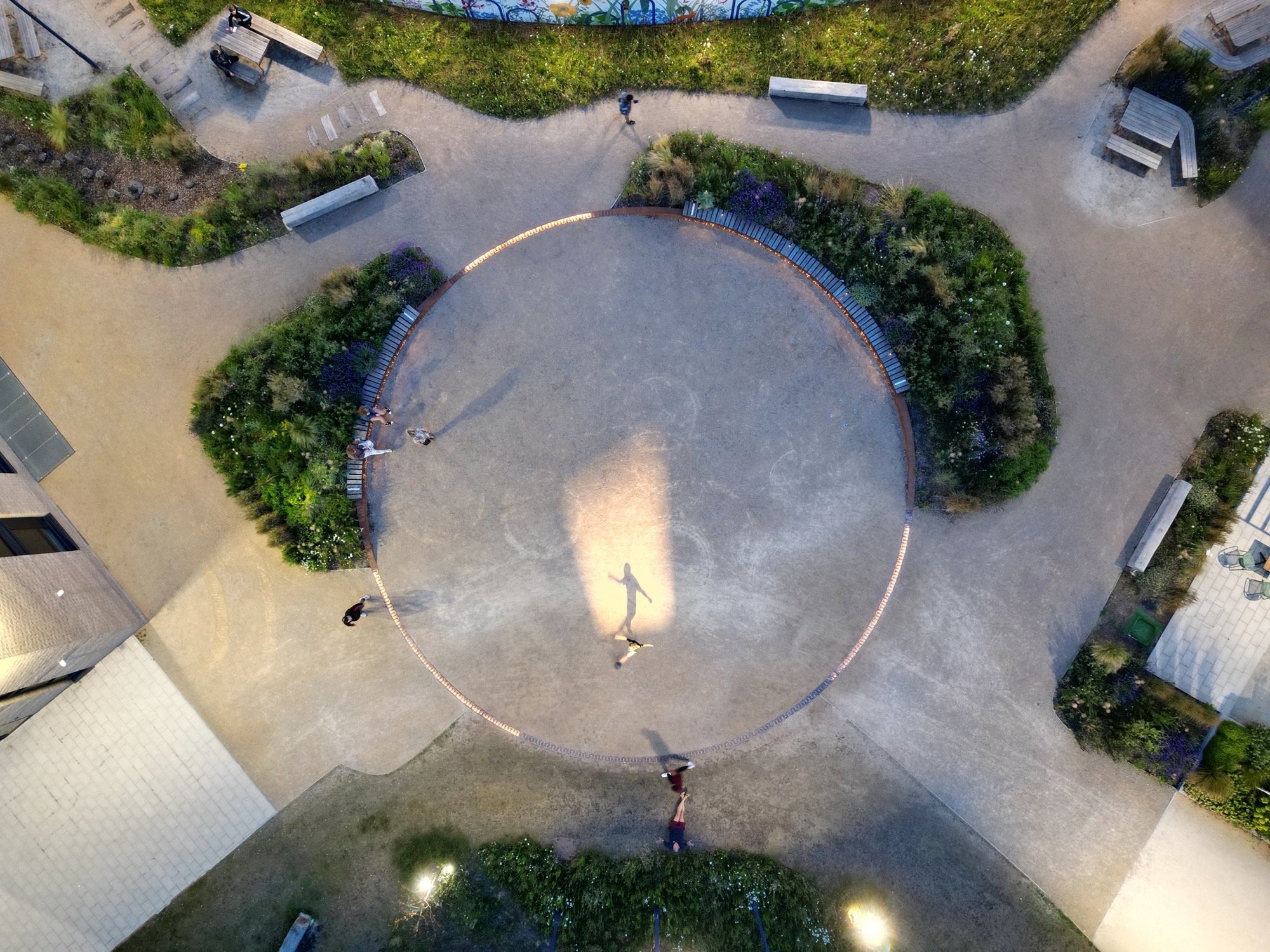
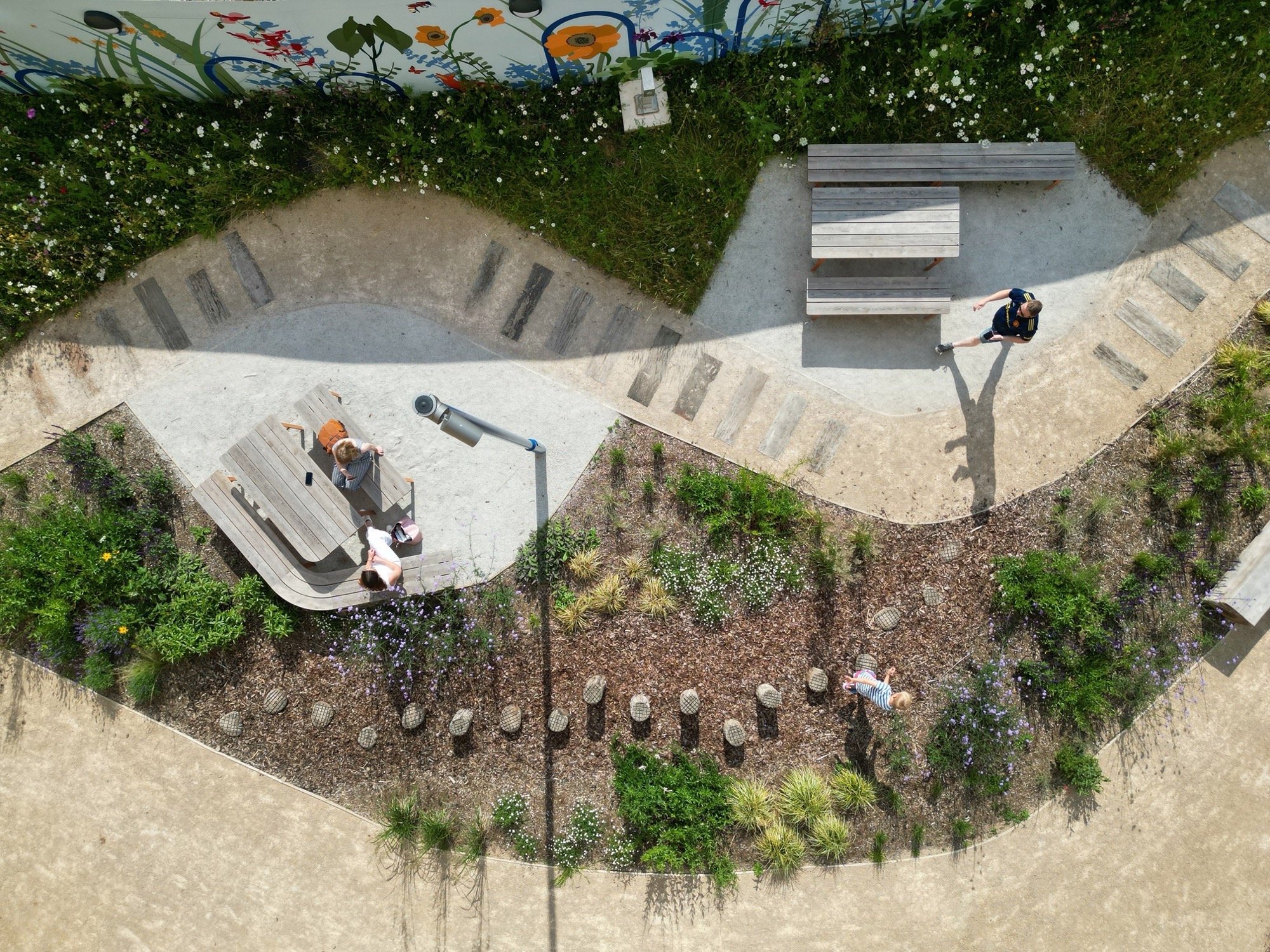
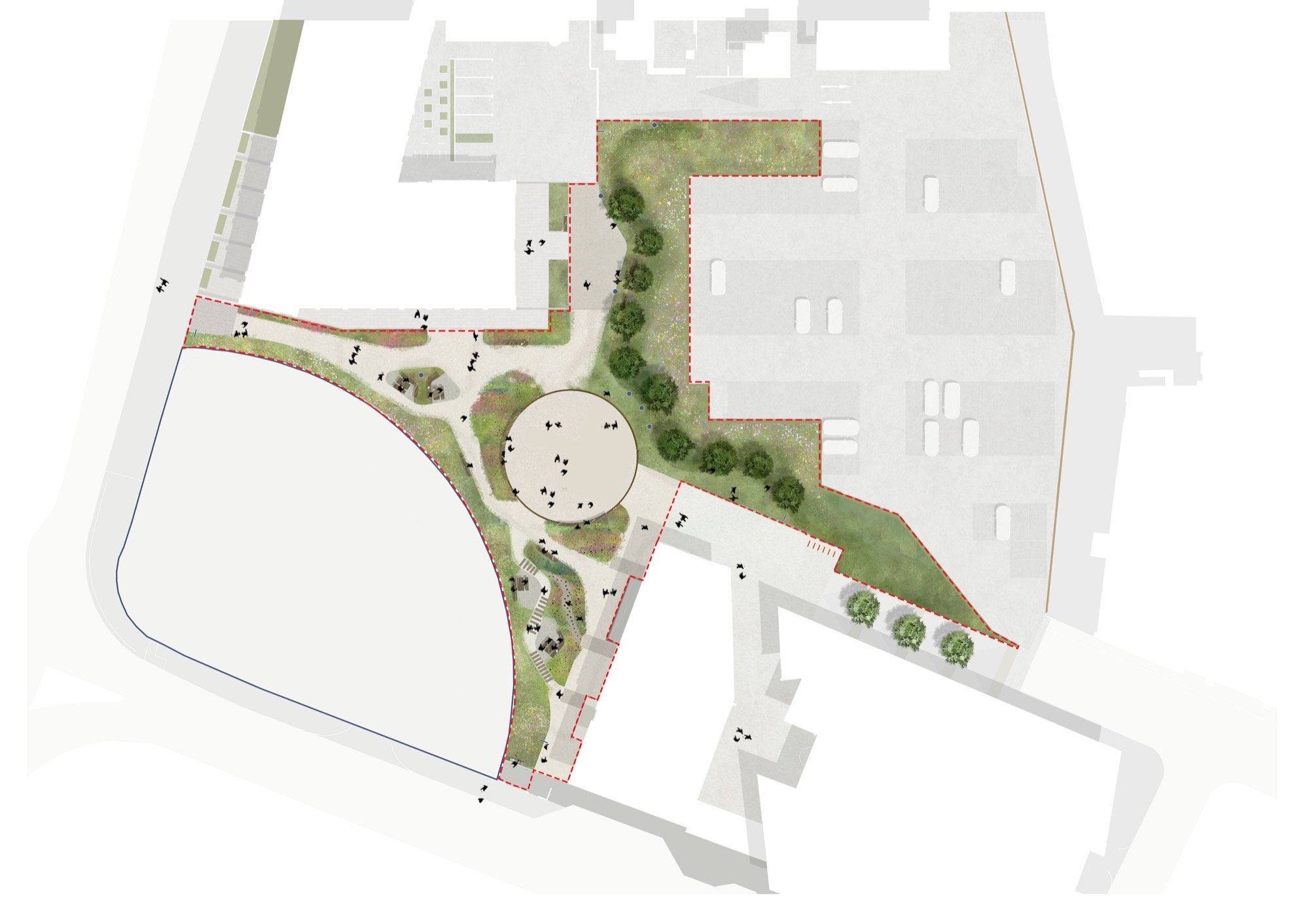
- Path designed around the central activity area.
- Three path types:
- Primary paths: main spine, connects the entrances to the central area.
- Secondary path: it branches off from the main path, providing access to landscaped areas and seating zones. It consists of narrower, more organic shapes; this path, formed among plants, offers an exploratory experience.
- Experiential path: it leads to the main center not directly, but in a playful and experiential way.
5- Carl Nielsens Allé
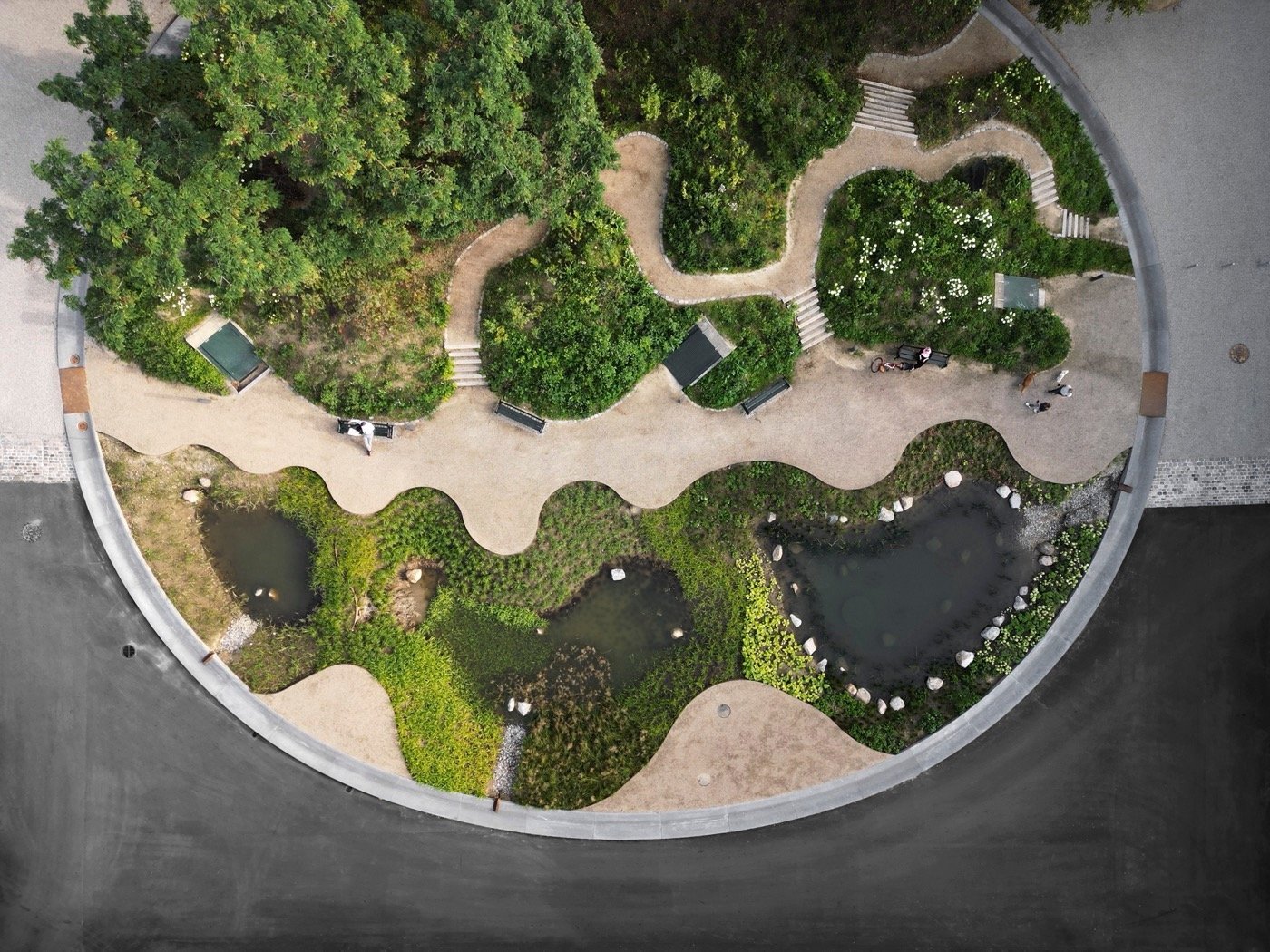
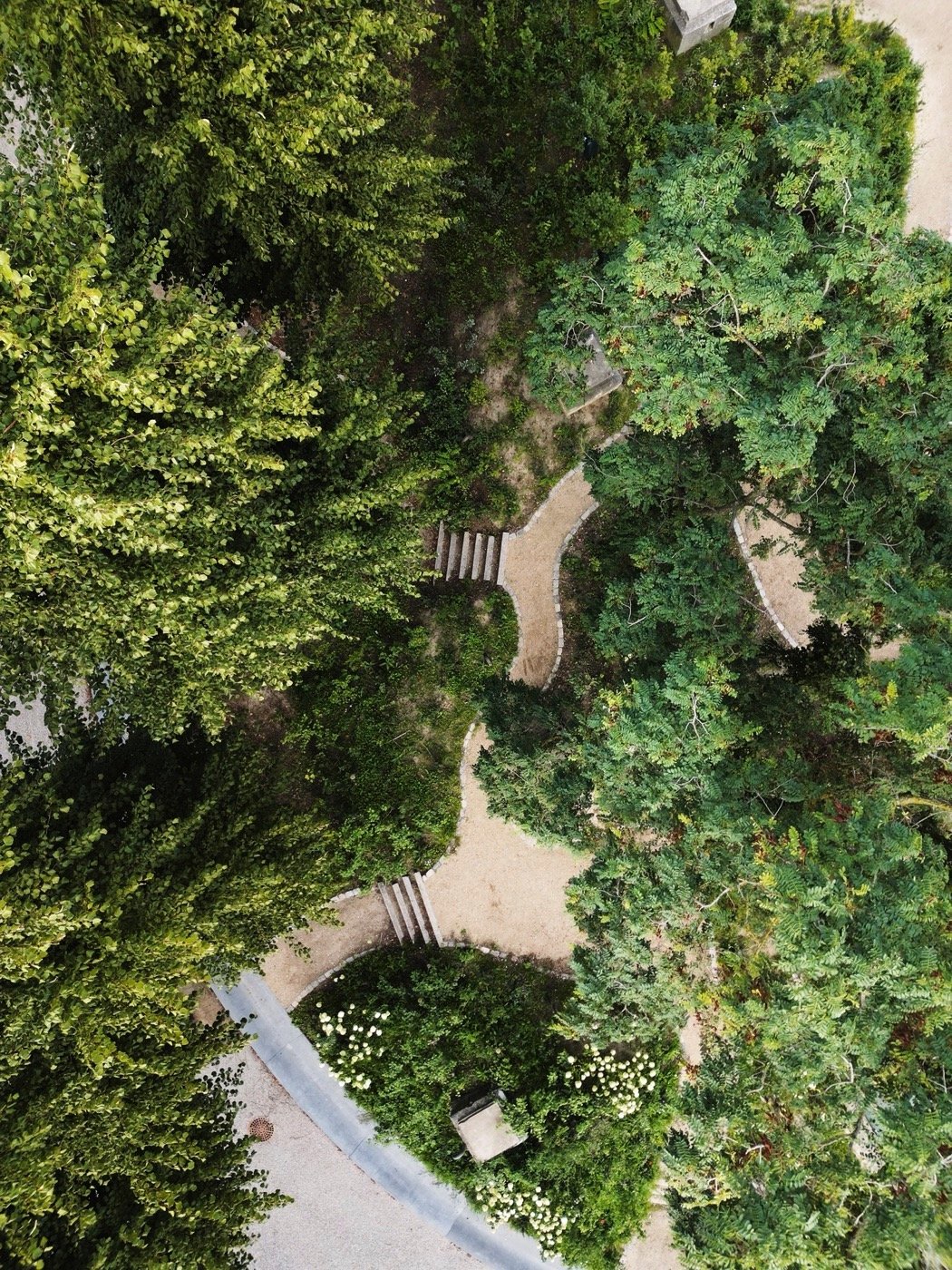
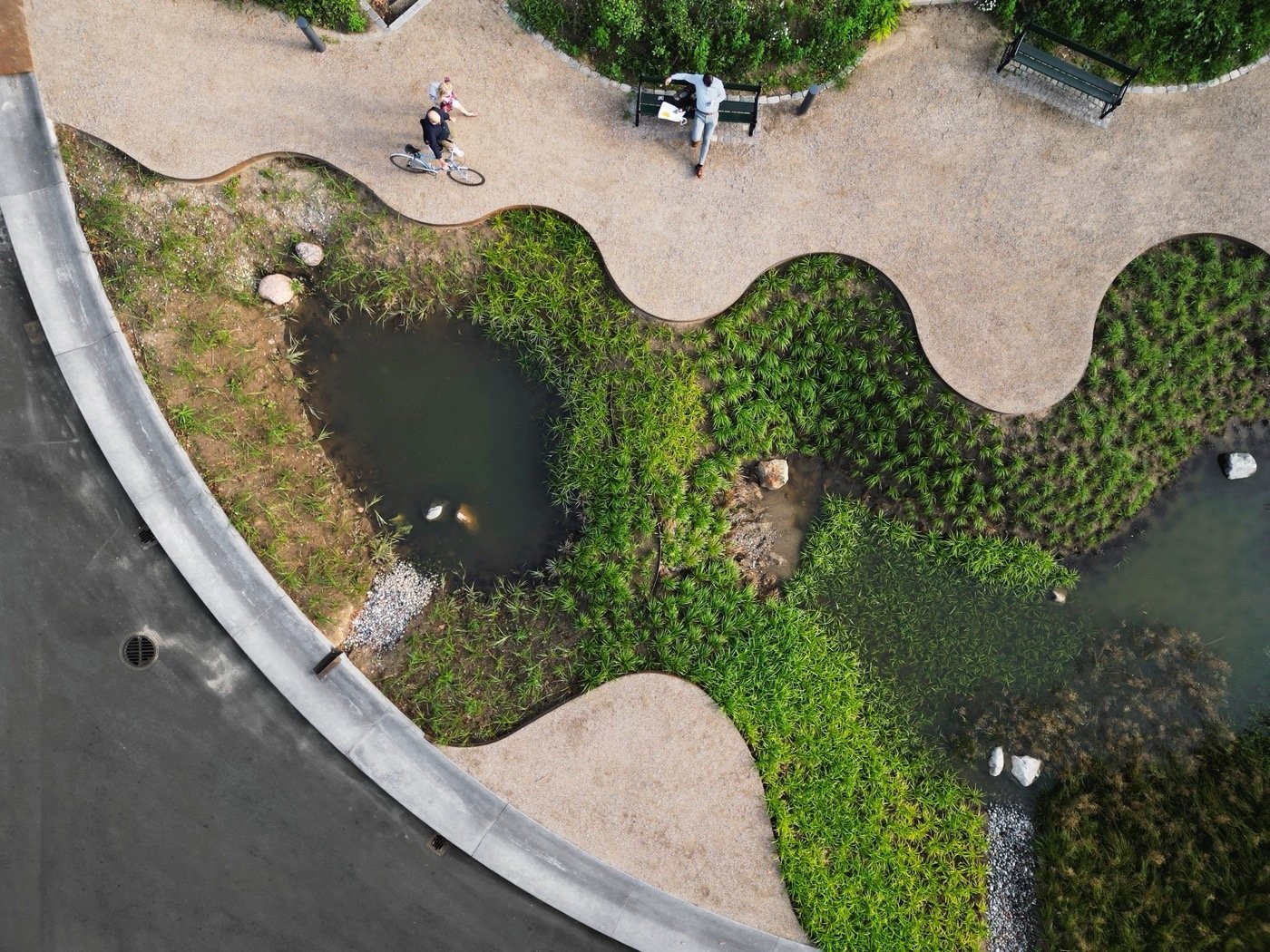
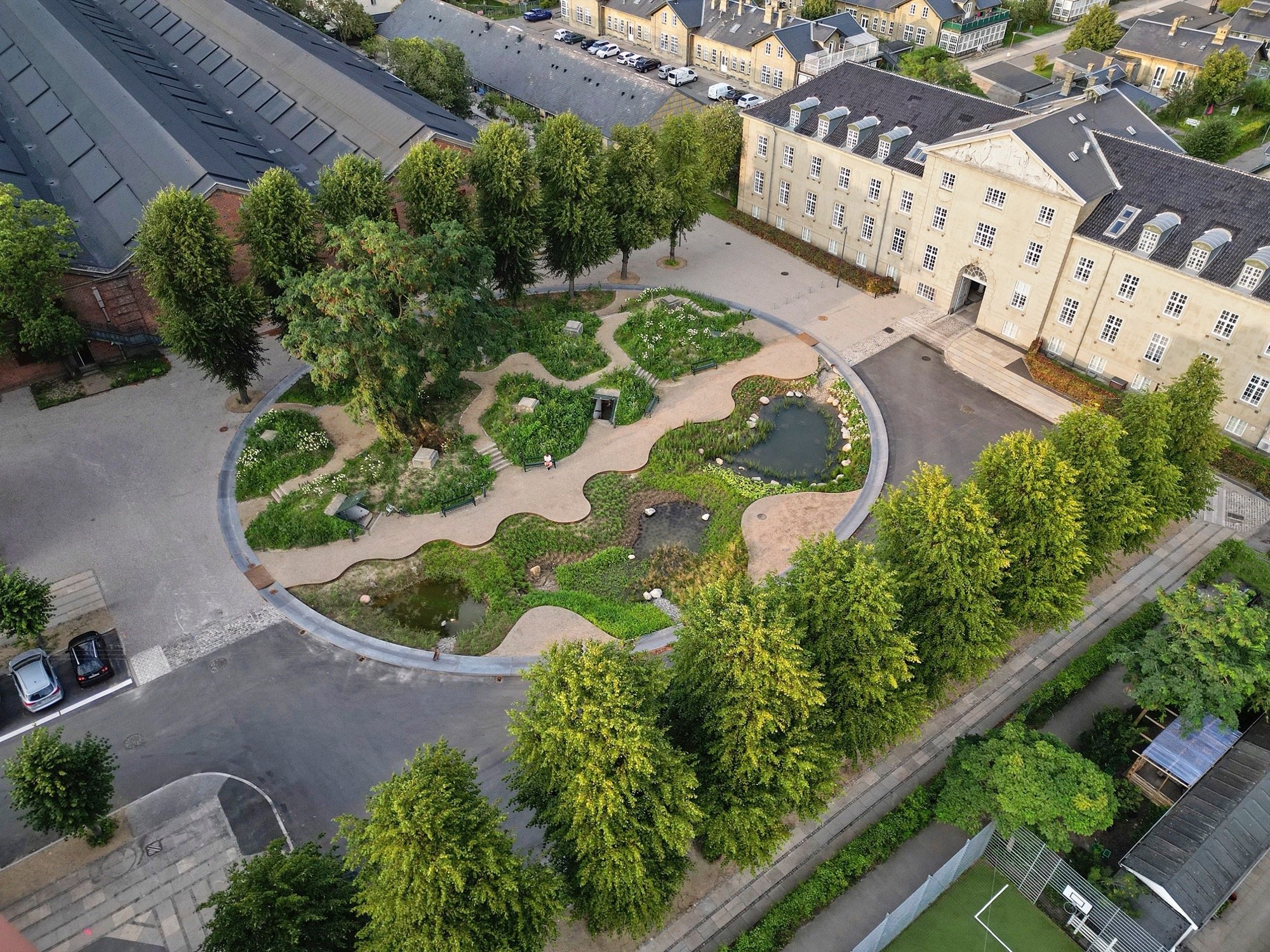
- It is formed by the main path that circles the oasis and secondary paths that connect to this chain.
- Circular, organic geometry
- The entire area is explored in an experiential way, through climate-adaptive water management practices.
- It has a non-direct, immersive orientation.
 ROOFTOP RESEARCH & DESIGN