1- Nature Inclusive
Nature inclusive design is a design approach where landscapes, urban spaces, and buildings support and encompass nature, rather than replacing or removing it. This understanding, which incorporates biodiversity around buildings and public spaces, strives to create a better living environment for all beings, both human and non-human.
How can a design include this sustainability method?
As designers adopt this approach, their aim is to integrate living spaces and nature without harming the environment. For example, they incorporate nesting areas for birds or other animals within the building, water collectors and natural drainage systems, and vegetation that balances rainwater and reduces the heat island effect.
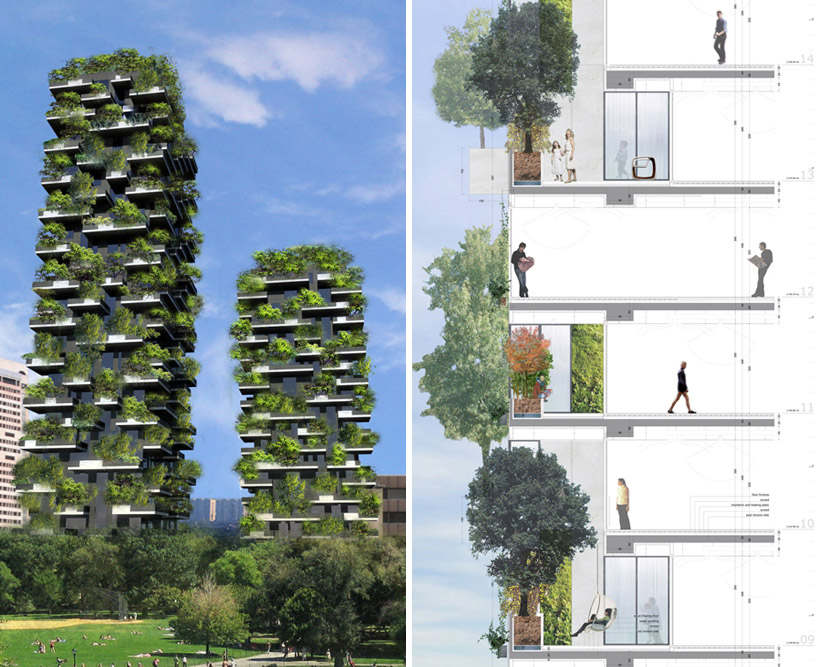
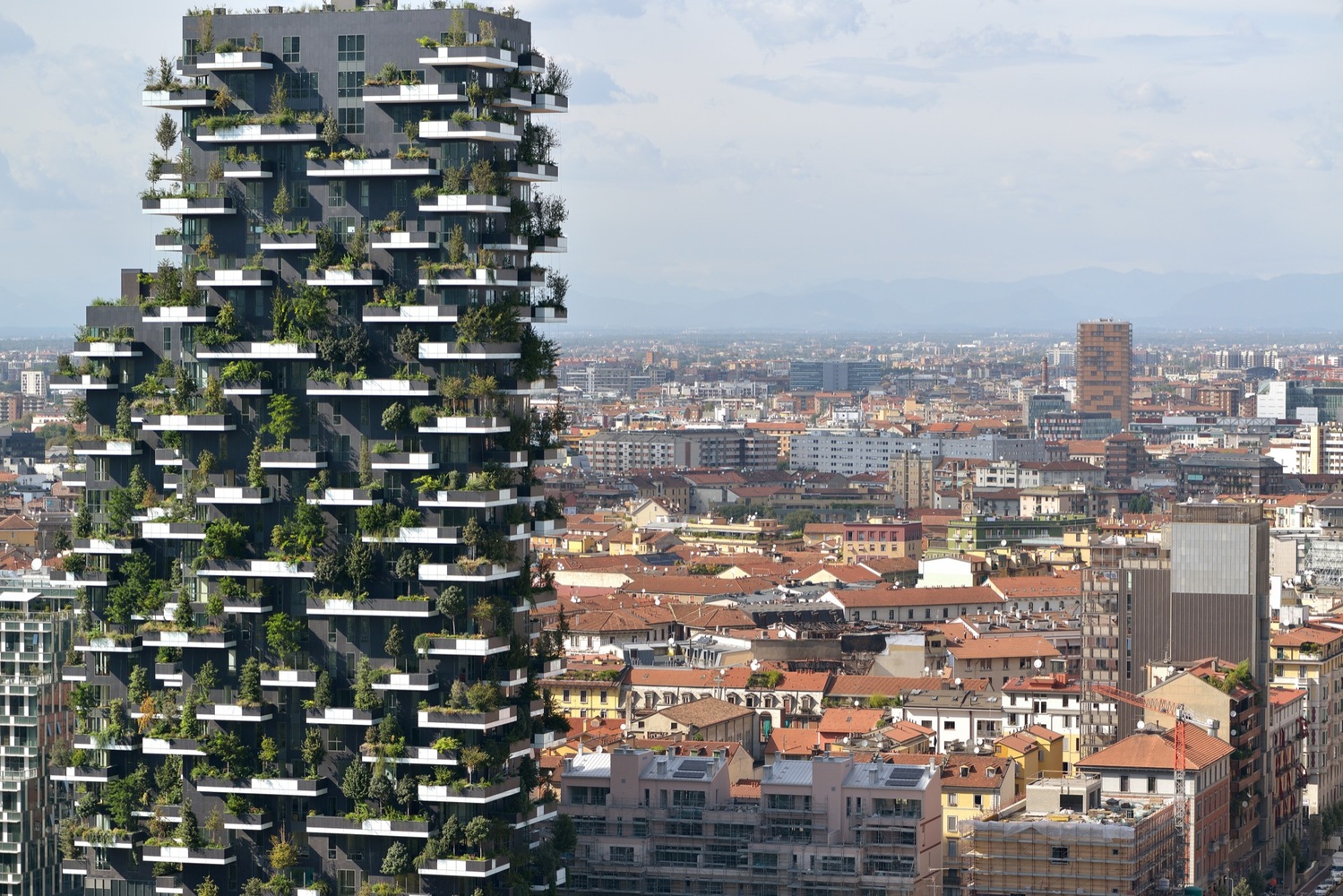
Bosco Verticale – Milan, Italy
As a reference project called ‘vertical forest’ directly integrates biodiversity with architecture. The building which contains more than thousands of trees and plants, aims to create a habitat for birds and other insects, while improving the air quality.
2- Systems/Flows
Instead of viewing structures merely as objects, they should be seen as living, systematic designs. Designs that are interconnected, in flux, and incorporate factors such as energy, water, people, and materials.
How can a design include this sustainability method?
Designers have come up with many ideas to benefit the ecosystem. Leading issues such as water drainage and trying to alleviate the burden on the city’s water infrastructure through vegetation have become quite popular.
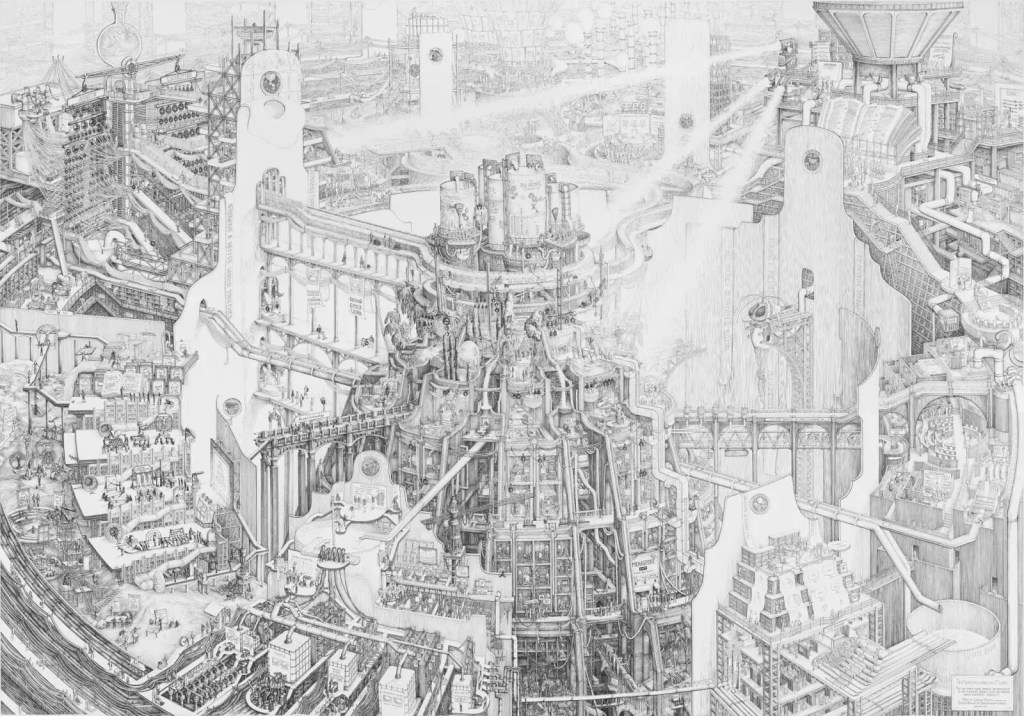
Superuse Studio – Dutch Pavillion
Jan Jongert and his team aim to create mutually beneficial flows when designing regenerative cities. They achieve this through a drainage system that allows water to reach homes without being carried into sewers or transported over long distances.
3- Climate Resilient
In other words, it can be called ‘adaptive’. A long-term adaptation process. Ensuring a transition to the ‘new normal’ in a constantly changing world. As conditions worsen, resistance to high temperatures, floods, and other such major factors must be ensured.
How can a design include this sustainability method?
Designs should be considered not only according to the conditions of the day, but also in light of every season. Multifunctional designs that adapt to every situation.
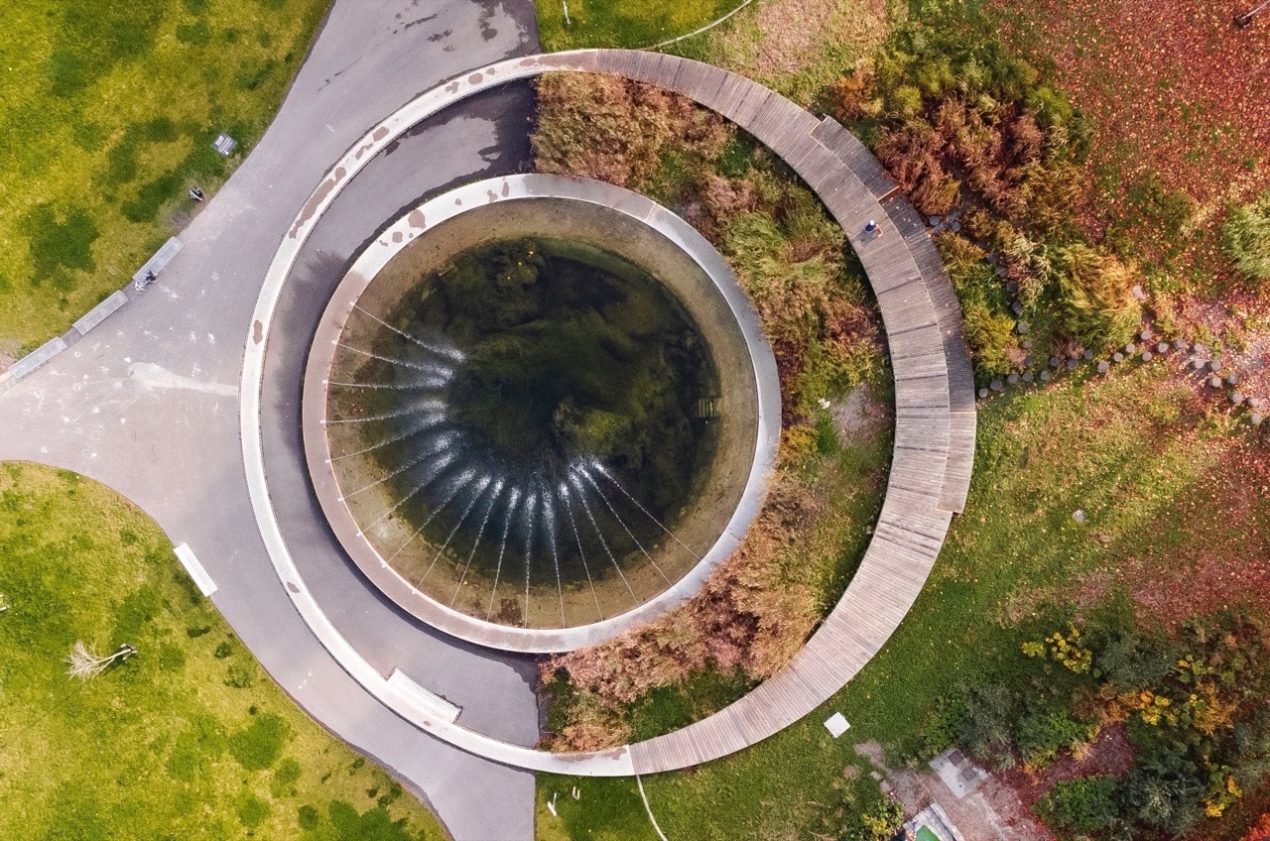
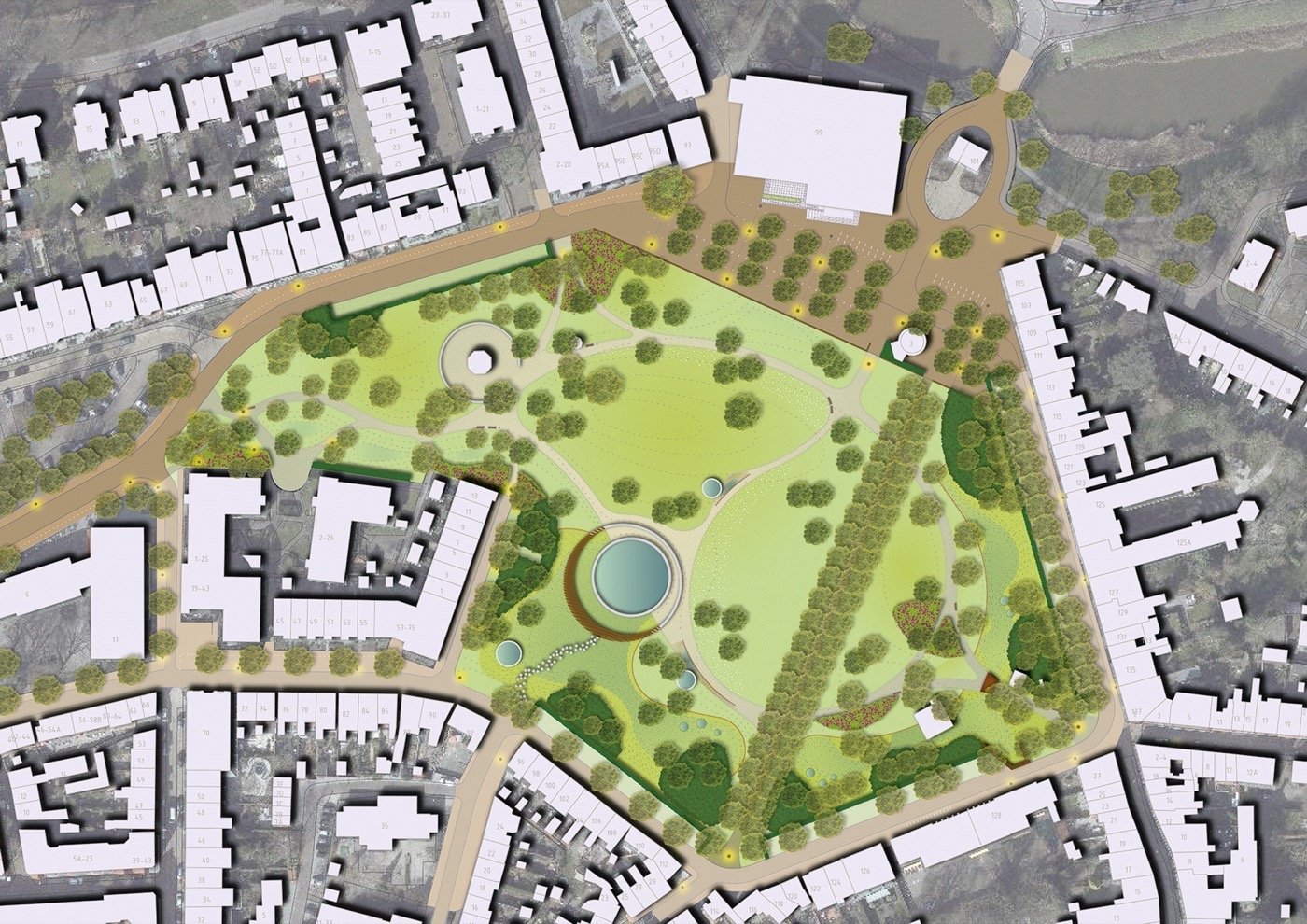

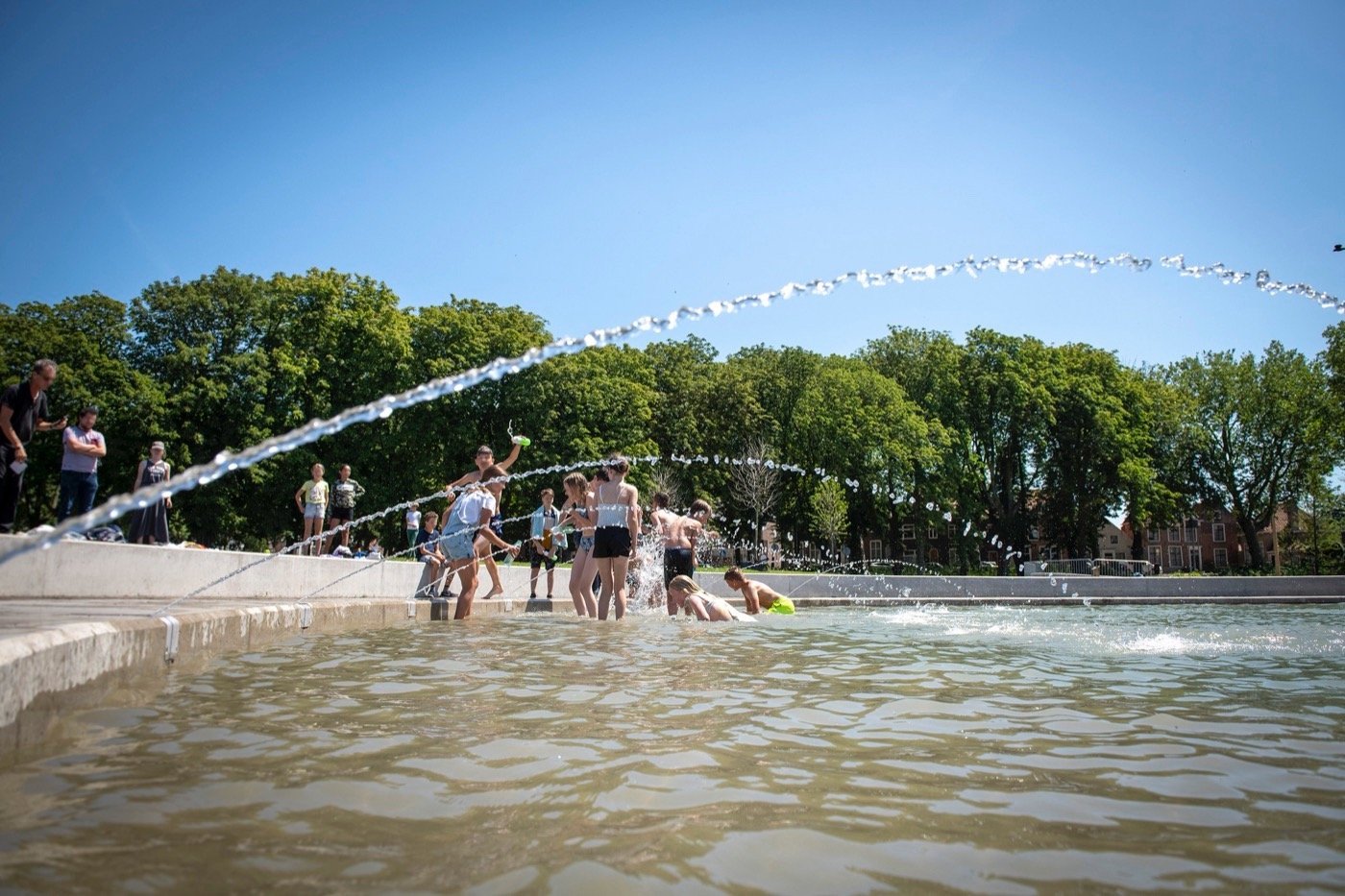
Molenwater Park
This waterfall, which also serves as a water reservoir, overflows and transforms into an attractive recreational pool for people.
 ROOFTOP RESEARCH & DESIGN